Queensland koala
Phascolarctos cinereus adustus
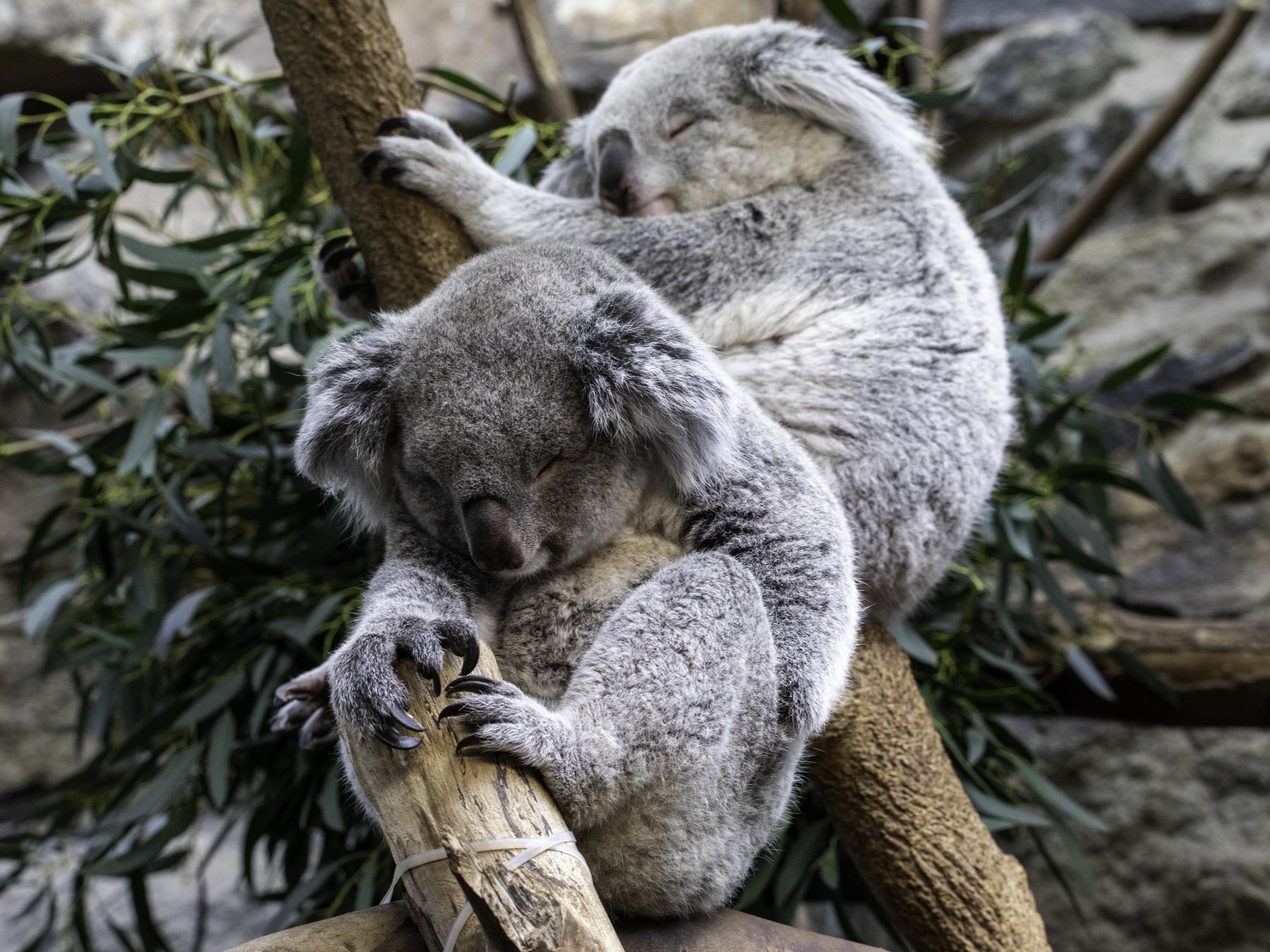
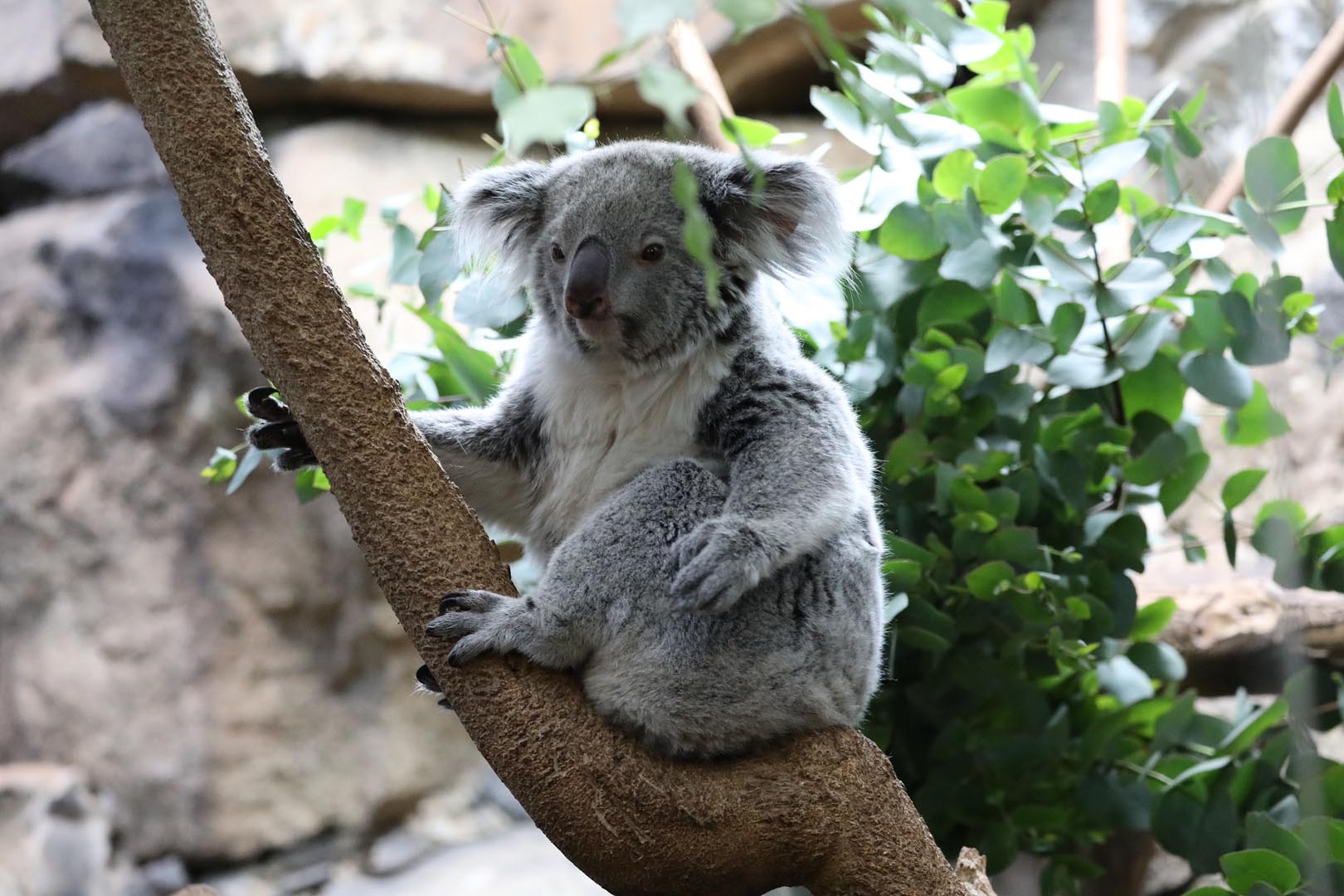
We are home to two Queensland koalas – Talara and Myaree. They are the only Queensland koalas in the UK.
Koalas are well known for their slow lifestyle, which includes around 20 hours of sleep. This behaviour is because of their diet. They eat eucalyptus leaves, which are very low in nutrient and energy, and take a long time to digest. On top of this, eucalyptus is toxic, so by taking things slow they can process it safely. They are the only animal to eat eucalyptus.
Though they look like littles bears, koalas are marsupials. This means they have a different reproductive system to most mammals and raise their young in a pouch – just like a kangaroo.
Population

Unknown
Diet

Herbivore
Habitat

Forest
Fact file
Although they are bear-like in appearance, koalas are actually marsupials, which means they have a different reproductive system to most mammals
Eucalyptus is toxic to most animals but koalas have a specialised digestive system which allows them eat it safely
Koalas normally sleep between 18 and 22 hours a day!
The smallest subspecies of koala
How we're helping
Like all the animals in our care our koalas are amazing ambassadors for their relatives in the wild and help hundreds of thousands of people connect with nature every year. They encourage visitors to learn about the threats facing wildlife and the action they can take to help create a world where nature is protected, valued and loved.
As a wildlife conservation charity, we care for the animals here at the zoo and work to protect species at risk around the world. From providing expertise in genetics and veterinary health, to protecting wild places with local conservation partners, and even restoring threatened species to the wild, we are active where we are needed most.
Find out more about RZSS conservation