Linne's two-toed sloth
Choloepus didactylus
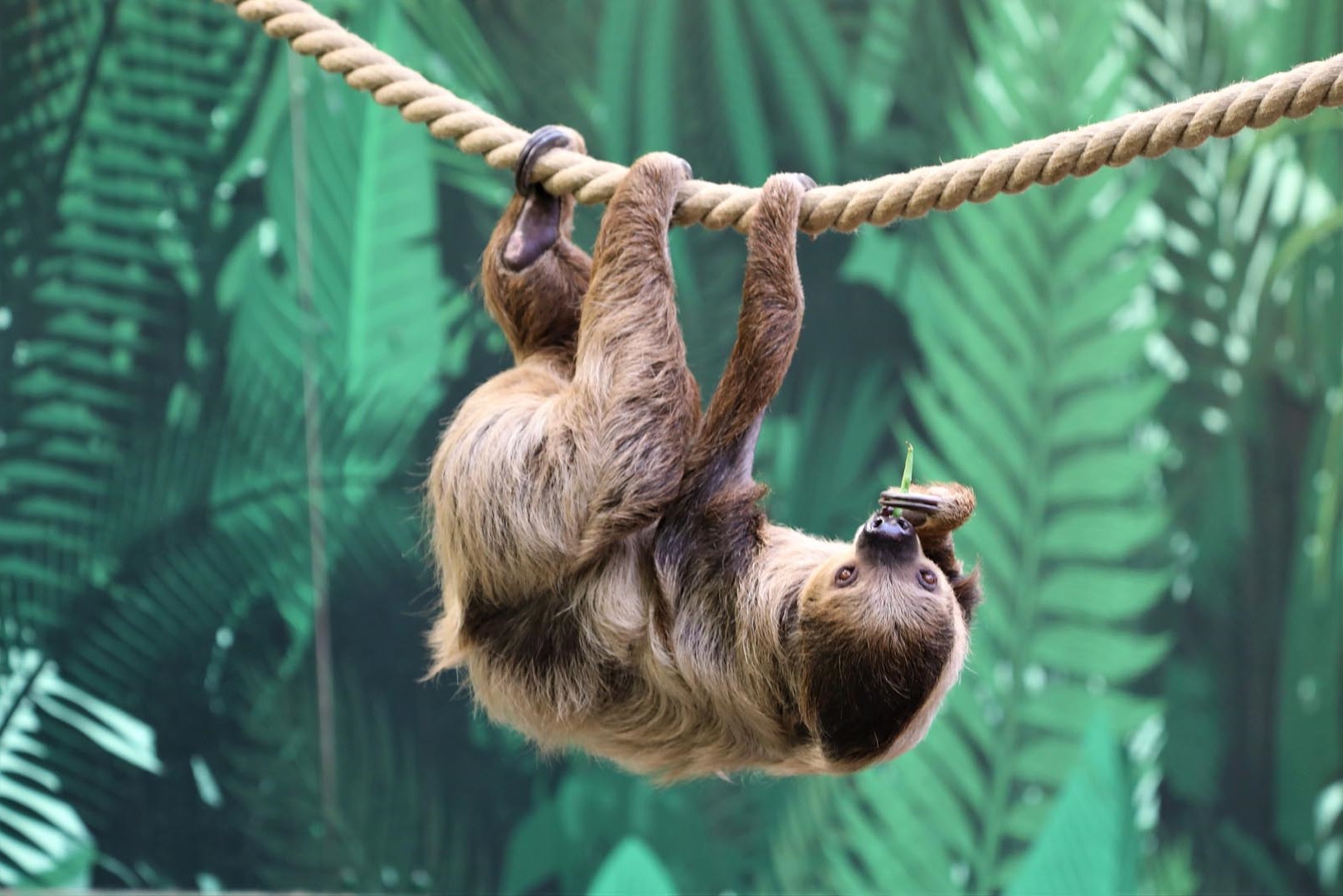
There are now three Linne’s two-toed sloths here at the zoo – our male Nico and our female Feira, alongside their brand new arrival and Scotland's first ever baby sloth Attenborough (Atty), named in honour of Sir David Attenborough.
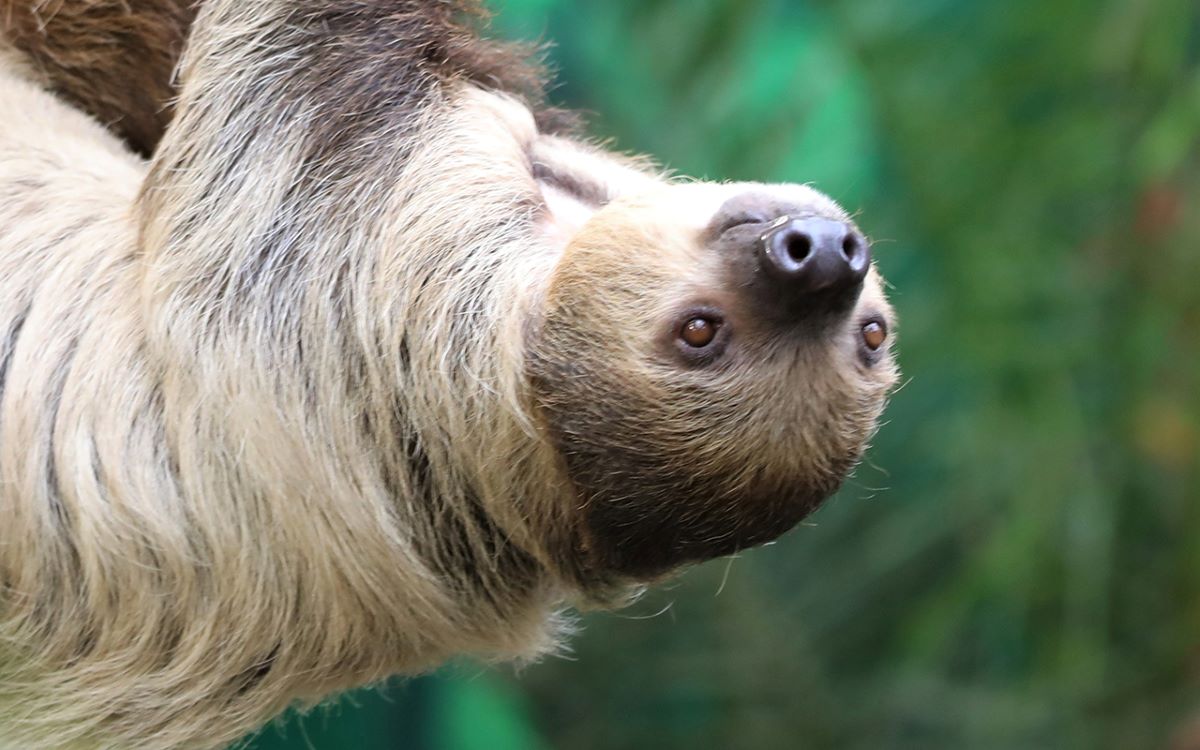
The Linne’s two-toed sloth has two long claws on their front arms. Their brown wiry fur can have a green tinge. This is because algae grows on them, which also attracts small insects to live on their bodies.
As well as their unusual looks, sloths are well known their inactivity. They move very slowly on land and in trees, and spend about 15 hours a day sleeping.
And they aren’t only slow on the outside! A sloth's digestive system features a large, multi-chambered stomach. It can take up to a month for food to pass through. This helps the sloth extract as much as it can from its herbivore diet.
Population

Decreasing
Diet

Herbivore
Habitat

Rainforest
Fact file
Sloths are sluggish movers with a top speed of just 0.02kmph
Their metabolism is incredibly slow too, they typically only poo once a week!
They are good swimmers and can move three times faster in water than on land
These sleepyheads spend at least 15 hours a day snoozing and mostly feed at night
Latest sloth news
View all news.jpg)
20 Oct 2026
Two minute read
16 Jul 2026
Two minute read
12 May 2026
Two minute read
How we're helping
The rainforests of Central and South America are home to six species of sloth. Although Linne’s numbers are strong – classified as least concern – other sloth species are under threat from hunting, habitat loss and the pet trade. Here at RZSS, our sloths are part of the European Endangered Species Programme (EEP) which ensures a healthy and genetically diverse population.
With help from players of People’s Postcode Lottery, RZSS has been supporting conservation partners in South America, the sloth’s native home, for over a decade. The Giant Armadillo Conservation Project established the first long term ecological study of endangered giant armadillos and the Anteaters & Highways initiative tracks giant anteaters to understand how the species is responding to increasing numbers of roads crossing their habitats in the wild.
Our sloths are amazing ambassadors for their relatives in the wild and help hundreds of thousands of people connect with nature every year. They encourage visitors to learn about the threats facing wildlife and the action they can take to help create a world where nature is protected, valued and loved.
Find out more about our conservation work with ICAS in South America