Swamp wallaby
Wallabia bicolor
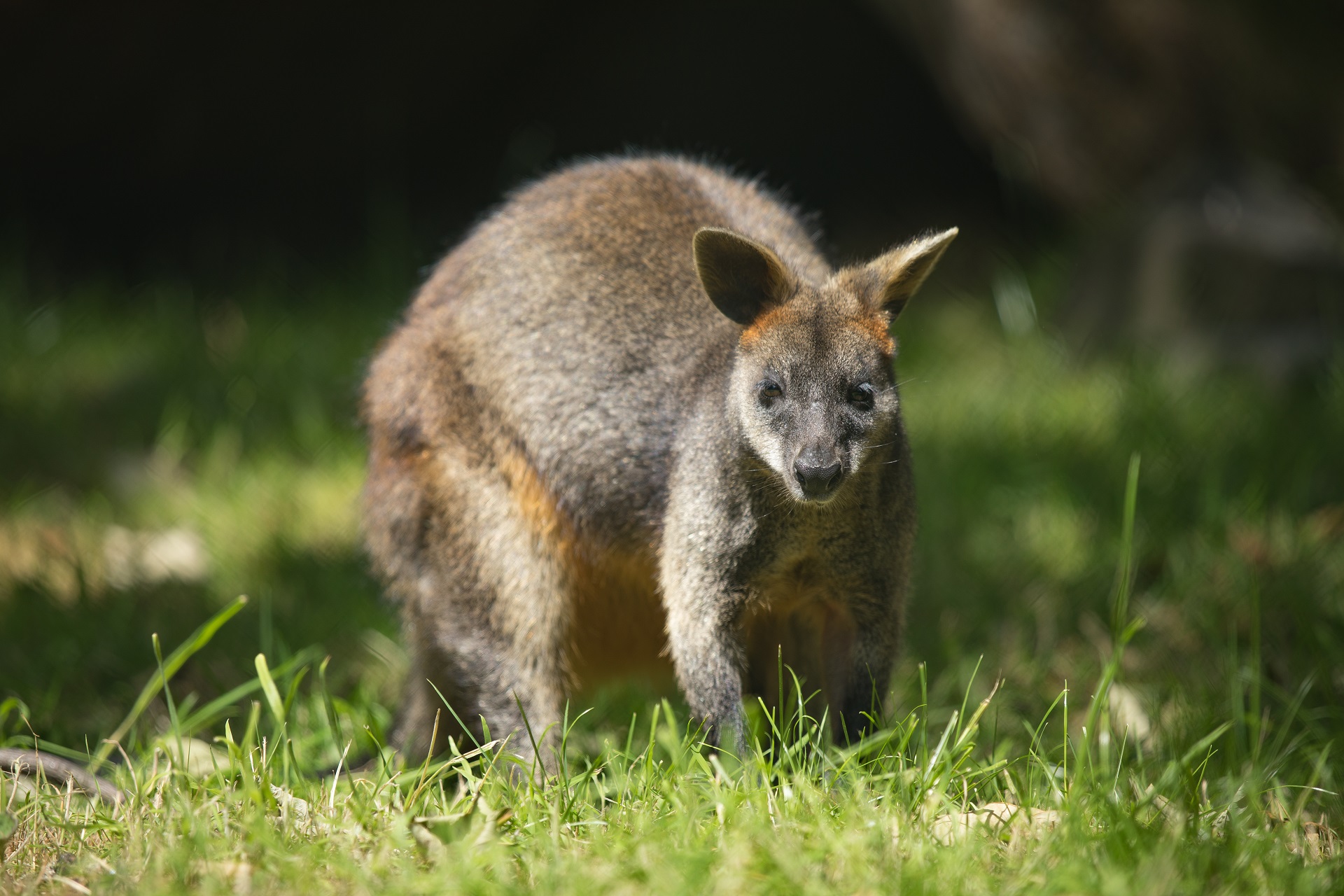
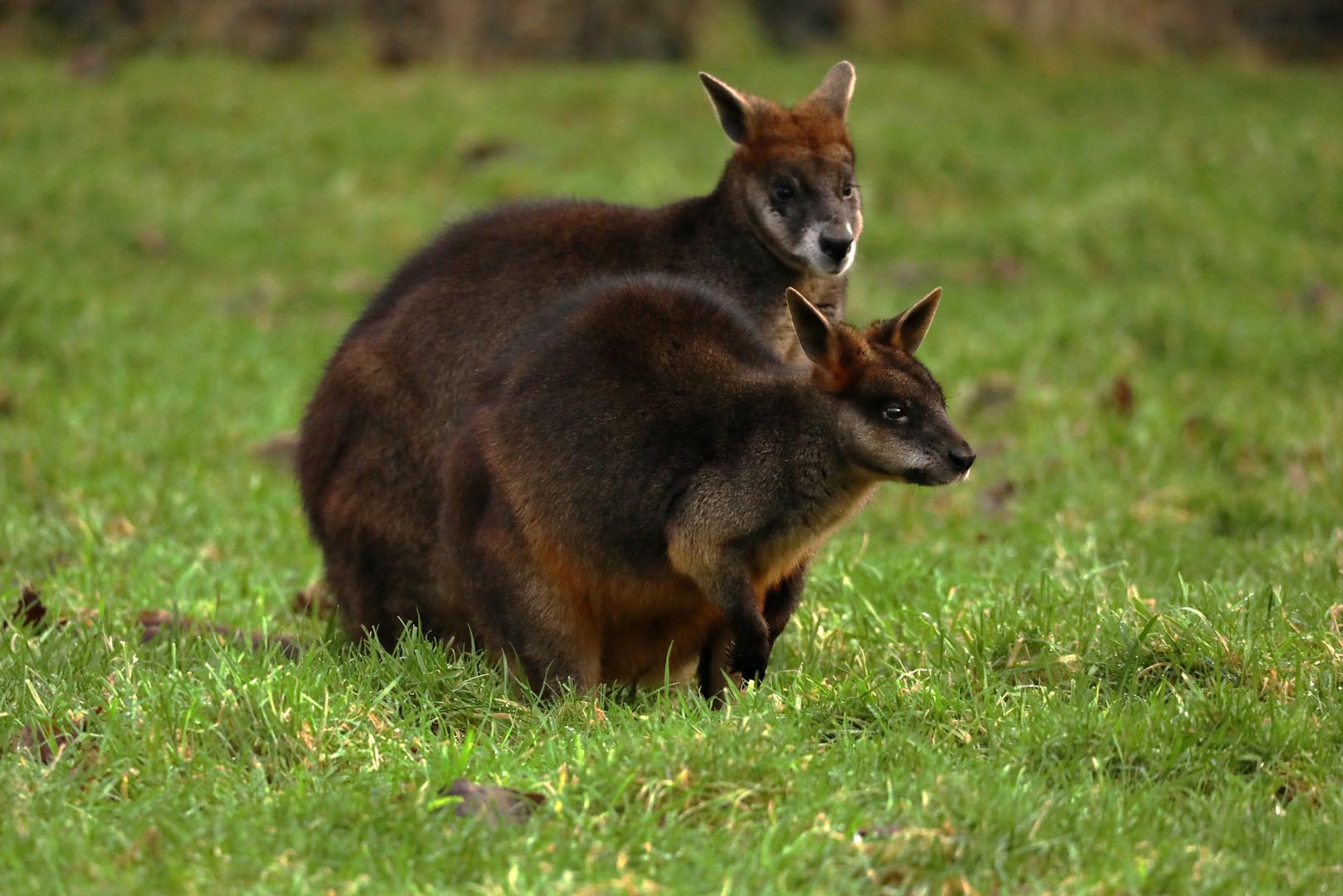
We are home to nine swamp wallabies. There are Allibo, Jaffa, Xuli, Kermit, Jannali, Luca, Koda, Kindal and Marcello.
They look a bit like kangaroos, but they are smaller and have longer fur. You can see wallabies and kangaroos side-by-side in the Wallaby Walkthrough!
Swamp wallabies live in forests, bushland, and coastal scrub, where there is lots of cover to hide in. Unlike some other wallabies, they prefer thick vegetation.
These wallabies are herbivores. This means they eat plants like grasses, shrubs, leaves, and ferns. They are most active at dawn and dusk and use their strong back legs to move through dense undergrowth.
Swamp wallabies are special because females can be pregnant with one joey while still caring for another in their pouch.
Population

Increasing
IUCN August 2018
Diet

Herbivore
Habitat

Forest
Fact file
Swamp wallabies have a mixed diet feeding on bushes, ferns, flowers, grasses, herbs, shrubs and tree saplings.
Their molars are specially shaped to help cut through the coarse, thick vegetation of their diet
After mating, a tiny embryo (which is the size of a jelly bean!) crawls into the pouch of the female wallaby and attaches to a teat where it stays for a few months to develop
How we're helping
Like all the animals in our care, our swamp wallabies are amazing ambassadors for their relatives in the wild and help hundreds of thousands of people connect with nature every year. They encourage visitors to learn about the threats facing wildlife and the action they can take to help create a world where nature is protected, valued, and loved.
As a wildlife conservation charity, we care for the animals here at the zoo and work to protect species at risk around the world. From providing expertise in genetics and veterinary health to protecting wild places with local conservation partners, and even restoring threatened species to the wild, we are active where we are needed most.
Find out more about RZSS conservation