Gelada baboon
Theropithecus gelada
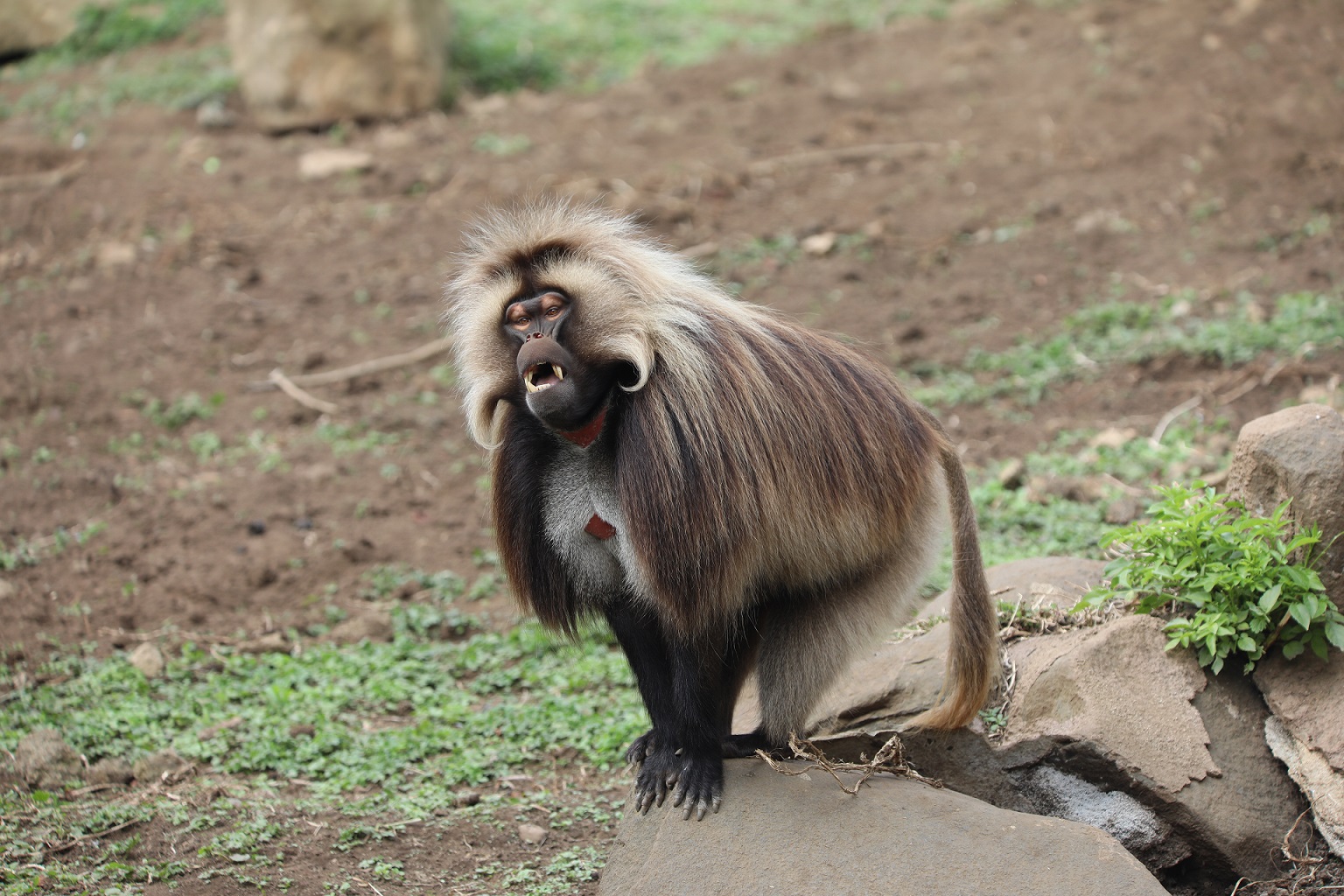
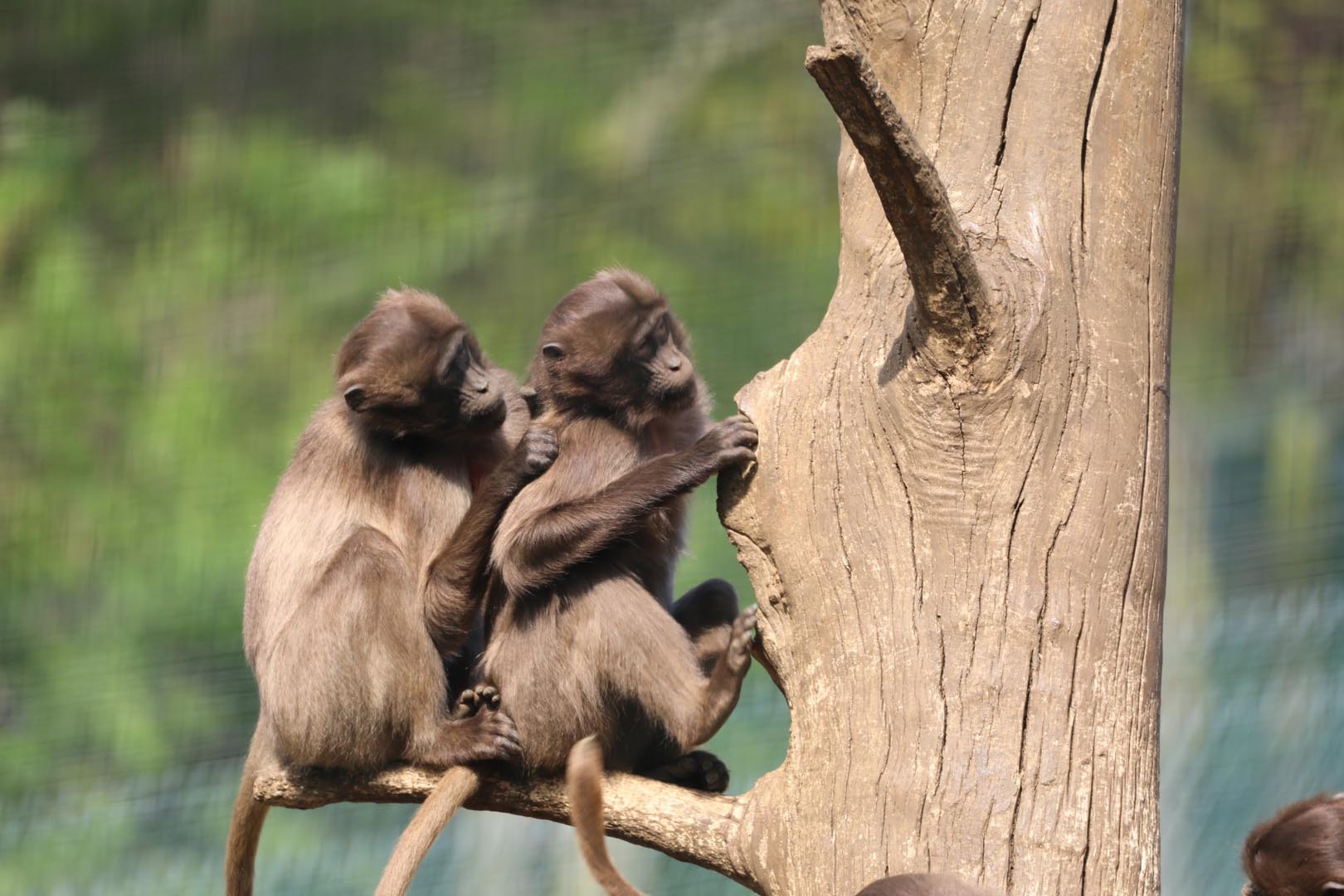
There is a large troop of over 20 gelada baboons here at Edinburgh Zoo.
You are likely to hear them before you see them, as geladas are famous for their rich vocal communication. They produce many sounds. These include lip-smacking, grunts and calls that resemble human speech patterns.
Males are larger than females and have a thick mane of hair, giving them a lion-like appearance. Both sexes have the red chest patch, which becomes brighter when they are excited or during breeding. This patch is why some call them bleeding-heart monkeys.
Despite their name, gelada baboons are not baboons. They are members of its own separate genus, called Theropithecus. They only live in the Ethiopian Highlands on high-altitude grasslands and rocky cliffs. Unlike many monkeys, geladas spend almost all their time on the ground.
Population

Unknown
Diet

Herbivore
Habitat

Mountains
Fact file
They are the last surviving species of grass-grazing primates
They are “shuffle-feeders” who rarely stand up when grazing. Instead, they prefer to continuously pluck grass blades whilst shuffling from place to place on their bottoms!
They use a complex mix of facial expression and vocalisations to communicate with others in the group. These can be very subtle or extremely obvious!
How we're helping
Like all the animals in our care our gelada baboons are amazing ambassadors for their relatives in the wild and help hundreds of thousands of people connect with nature every year. They encourage visitors to learn about the threats facing wildlife and the action they can take to help create a world where nature is protected, valued and loved.
As a wildlife conservation charity, we care for the animals here at the zoo and work to protect species at risk around the world. From providing expertise in genetics and veterinary health, to protecting wild places with local conservation partners, and even restoring threatened species to the wild, we are active where we are needed most.
Find out more about RZSS conservation