Visayan spotted deer
Rusa alfredi
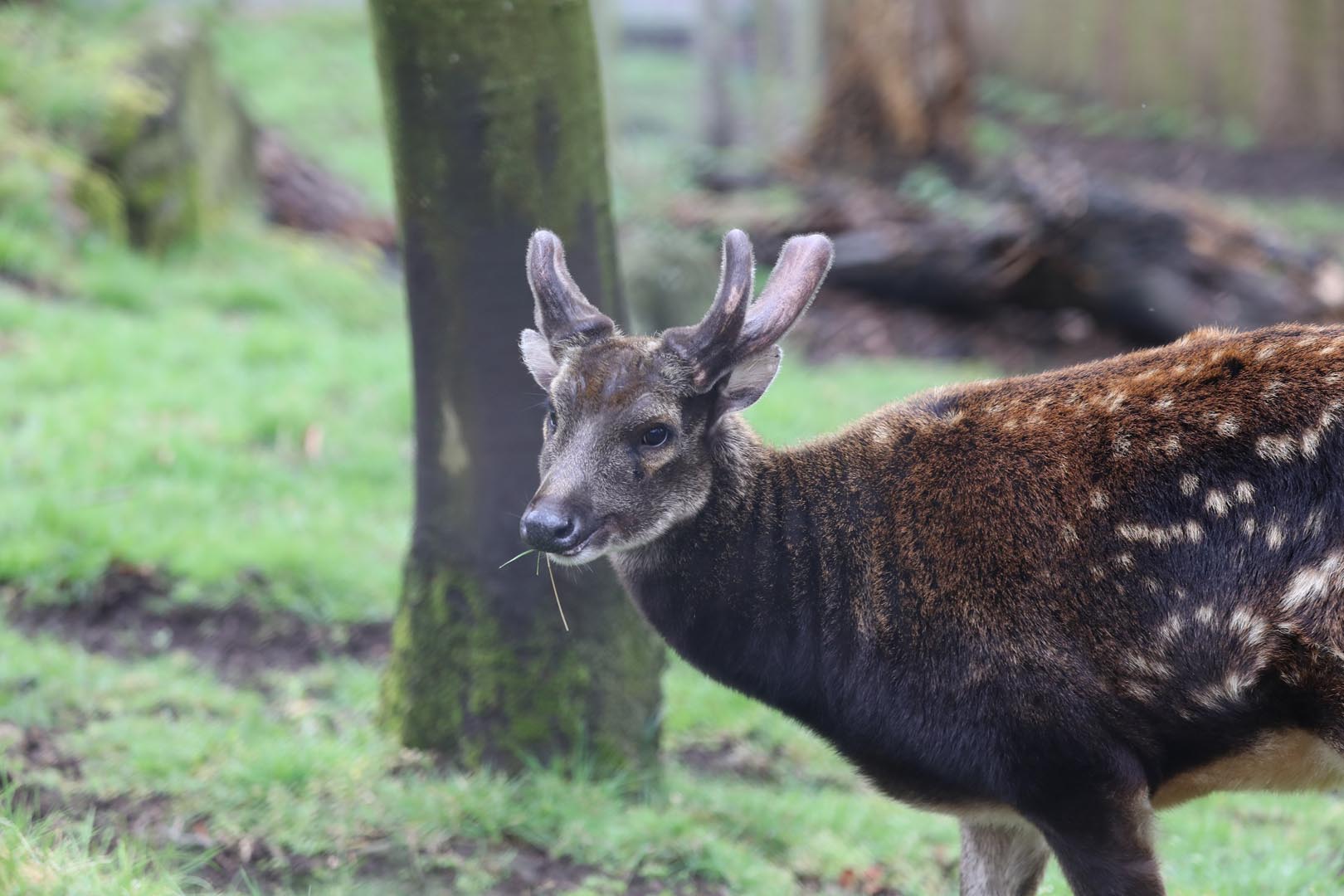
We currently have four Visayan spotted deer – Watson, Pablo, Lyra and Ulan, who was born in 2025.
The Visayan spotted deer is a small, shy deer native to a few islands in the central Philippines. It has a dark brown coat covered in pale spots, which help it blend into forest shadows.
One interesting feature of these deer is their small preorbital glands. These are small holes in front of their eyes that make a special scent which they use to mark their territory. It also helps them find food, stay safe and keep in touch with other deer in the dense forest.
Visayan spotted deer feed on grasses, leaves, shoots, and fallen fruit.
Sadly, they are Critically Endangered due to habitat loss and hunting. Conservation programmes are working to protect the last remaining populations.
Population

Decreasing
Diet

Herbivore
Habitat

Rainforest
Fact file
It is a nocturnal species of deer normally found in the rainforests of the Visayan island
Also known as the Philippine spotted deer
They are quite social animals, usually found in small groups of three to five
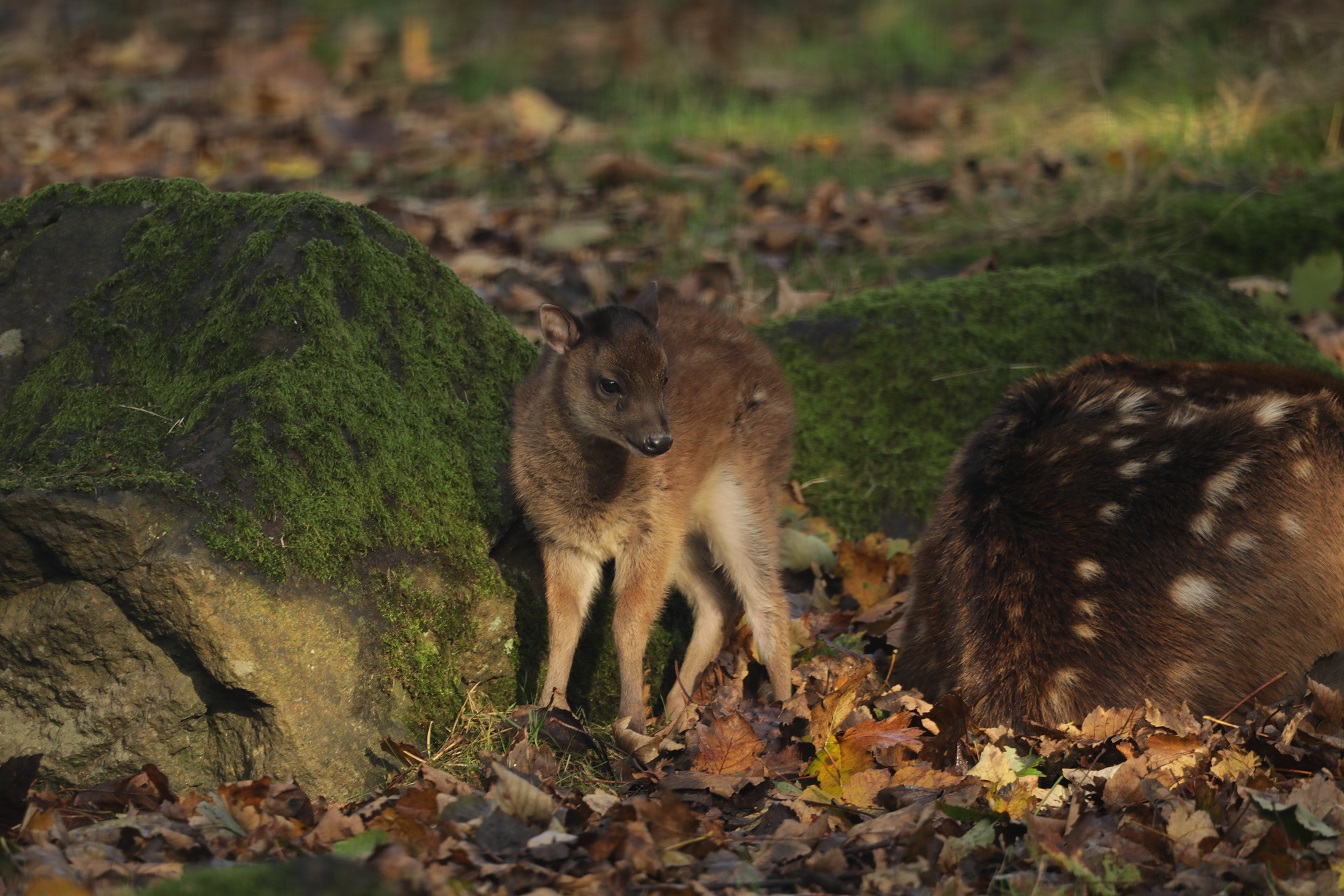
After a gestation of around 240 days, females usually give birth to a single calf
How we're helping
Like all the animals in our care, our Visayan spotted deer are amazing ambassadors for their relatives in the wild and help hundreds of thousands of people connect with nature every year. They encourage visitors to learn about the threats facing wildlife and the action they can take to help create a world where nature is protected, valued, and loved.
As a wildlife conservation charity, we care for the animals here at the zoo and work to protect species at risk around the world. From providing expertise in genetics and veterinary health to protecting wild places with local conservation partners, and even restoring threatened species to the wild, we are active where we are needed most.
Find out more about RZSS conservation