Drill
Mandrillus leucophaeus
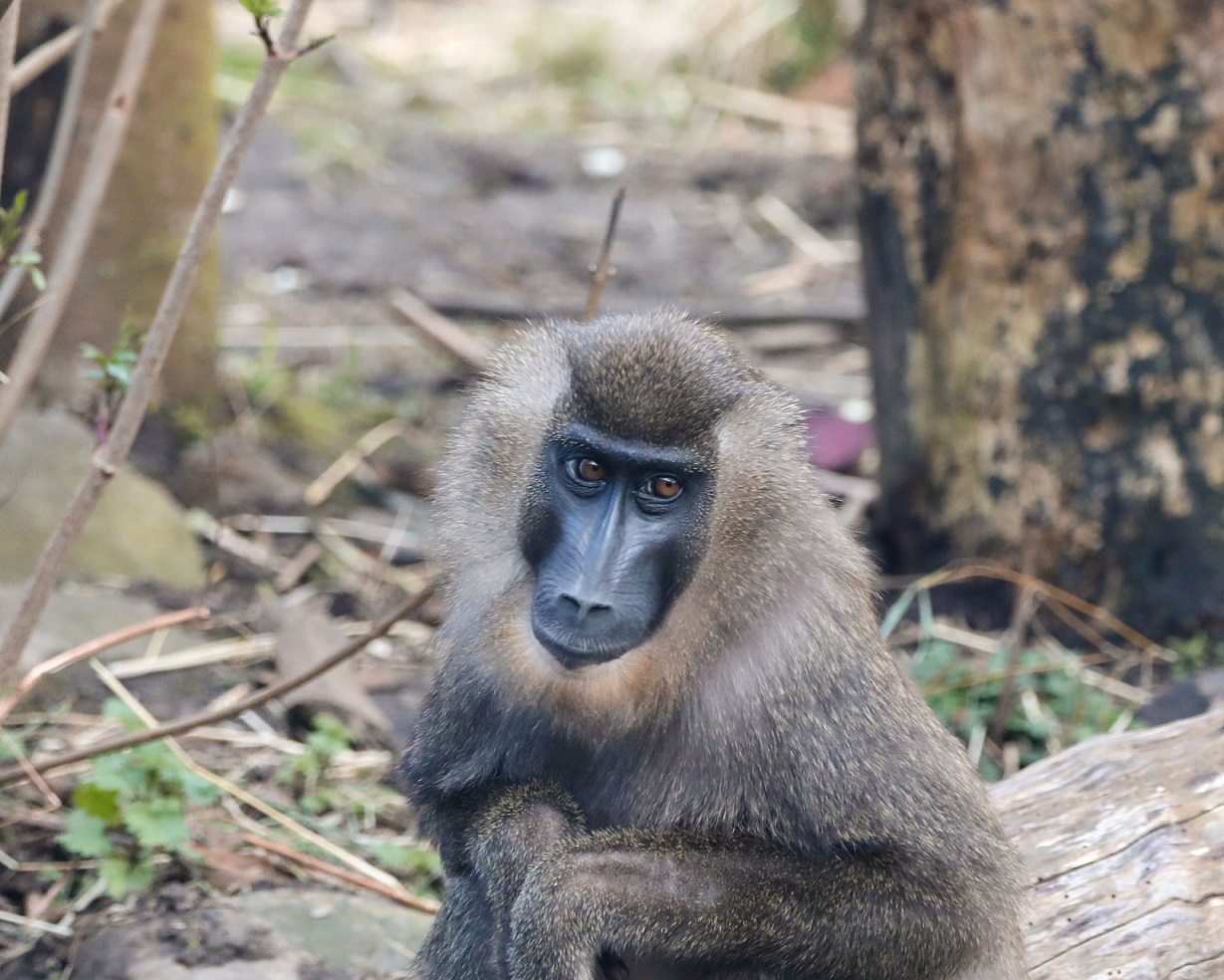
We are home to three female drills, Mariana, Patani and Eschu, and a male drill, Tayo.
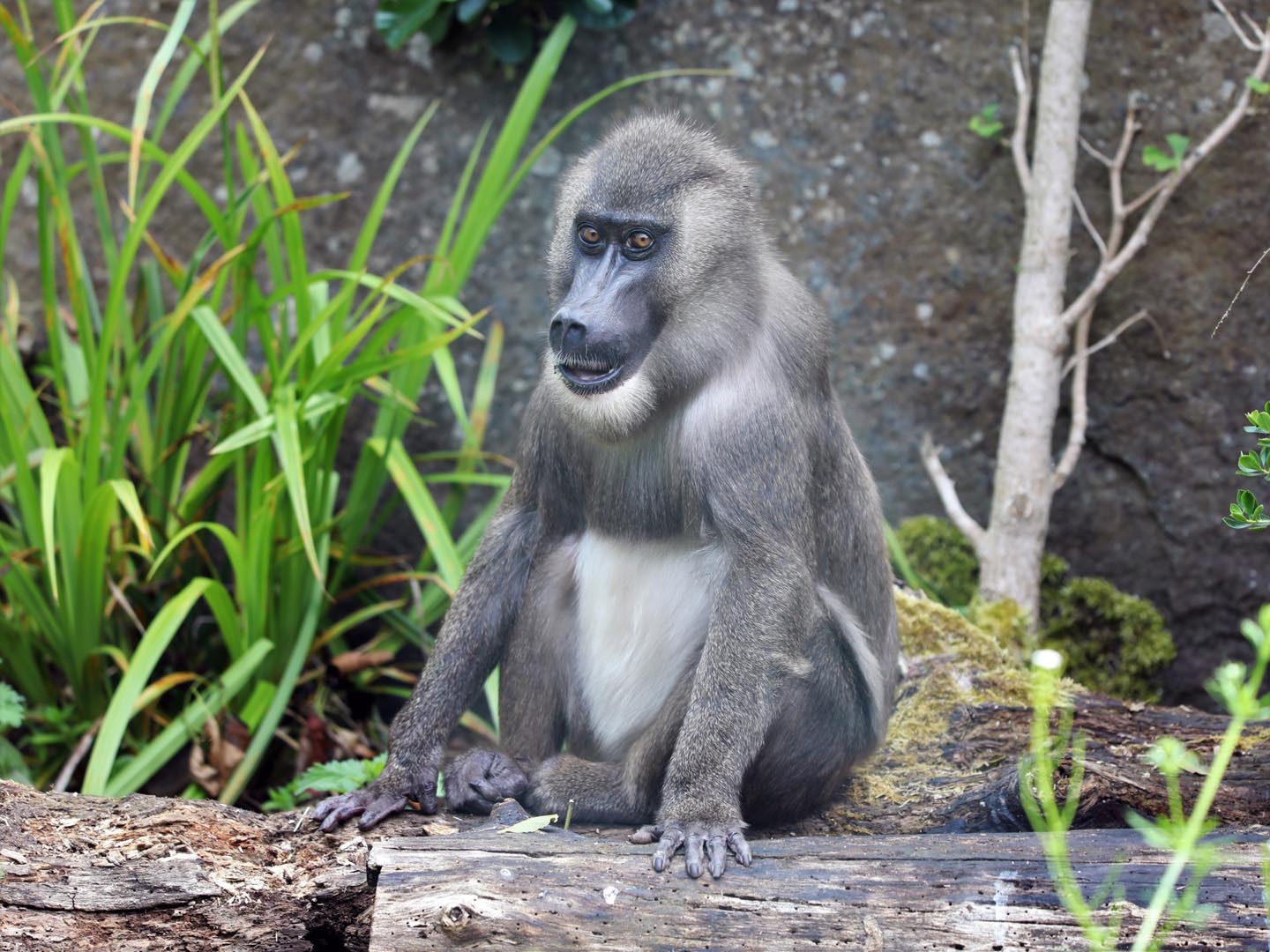
Drills are large, powerful primates and a close relation to mandrills and baboons. Native to West and Central Africa, they mostly live in tropical rainforests in highly social groups known as hordes.
They have bright rumps that are coloured pink, mauve and blue. Males are much larger than females and have strong, muscular bodies. More mature males have a pink lower lip and white chin.
Drills are omnivores, feeding on fruits, seeds, leaves, insects and small animals. Their strong jaws allow them to crack hard nuts and seeds that many other animals cannot eat.
Population

Decreasing
Diet

Omnivore
Habitat

Rainforest
Fact file
These endangered monkeys have an average lifespan of 20 years
The adult males are more than twice the size of females
Drills are close relatives of mandrills but lack the intense facial colouration
How we're helping
Like all the animals in our care, our drills are amazing ambassadors for their relatives in the wild and help hundreds of thousands of people connect with nature every year. They encourage visitors to learn about the threats facing wildlife and the action they can take to help create a world where nature is protected, valued, and loved.
As a wildlife conservation charity, we care for the animals here at the zoo and work to protect species at risk around the world. From providing expertise in genetics and veterinary health to protecting wild places with local conservation partners, and even restoring threatened species to the wild, we are active where we are needed most.
Find out more about RZSS conservation