Asiatic lion
Panthera leo persicus
.jpg)
UPDATE: Following the exciting news that Bindee has given birth to two beautiful lion cubs, the Asiatic lion habitat is closed for the foreseeable. Our keepers and veterinary team are keeping an eye on mum and babies and want her to have a nice, quiet environment while they start to bond. Thank you for your understanding.
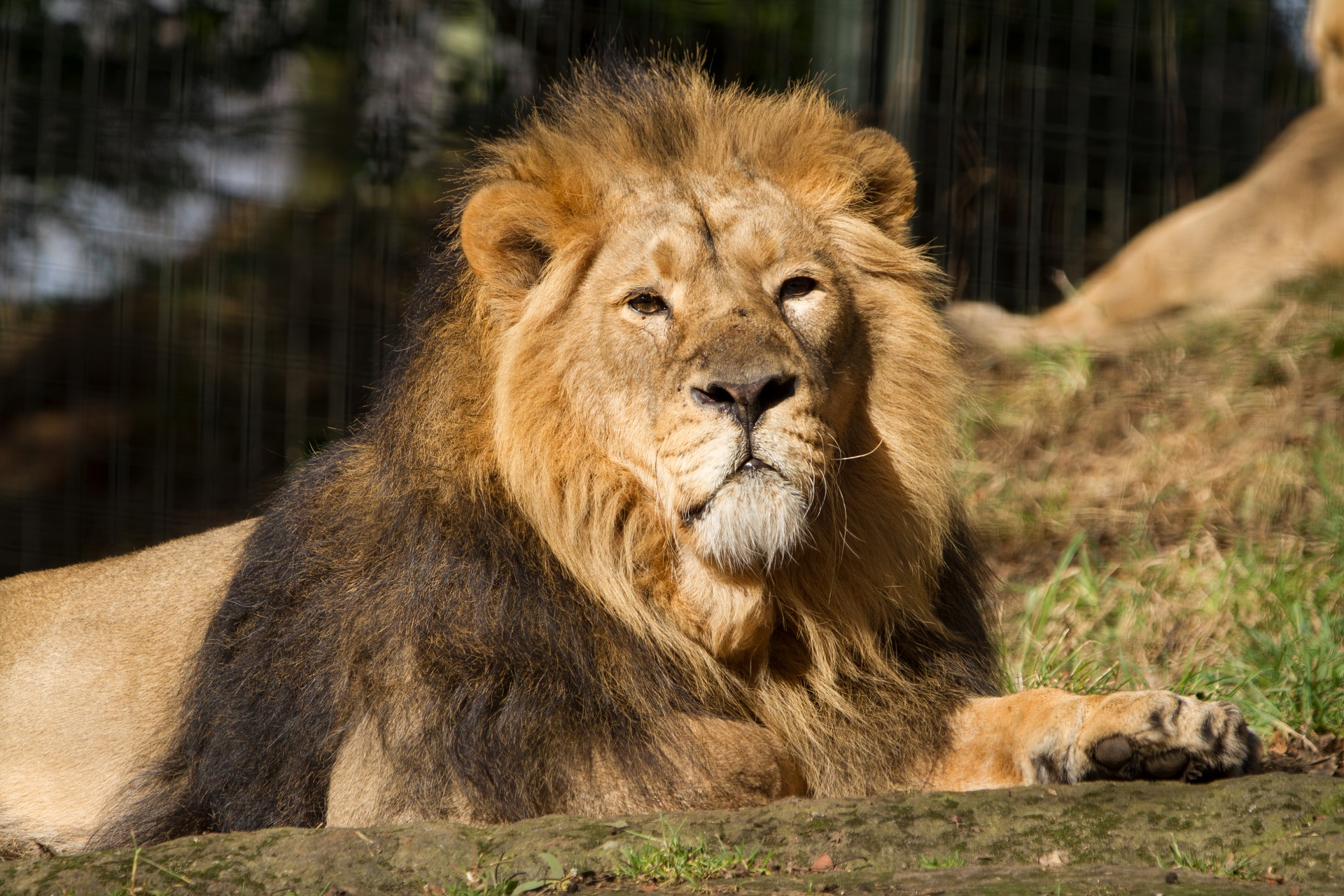
There are two Asiatic lions here at Edinburgh Zoo. Our male is called Jayendra, also known as Jay, and our female is Bindee.
Jay was born in 2010 and moved here in 2012 from Bristol Zoo. Bindee joined us from France’s Parc Zoologique et Botanique de Mulhouse in 2024.
The male Asiatic lion has a short, sparse and darker mane compared to the fuller mane of the African lion. As a result, the male Asiatic lion's ears tend to always remain visible.
There are only about 600 Asiatic lions left in the wild. They live in one place: the Gir Forest in Gujarat, India. Because their home is so small, they are at risk from sickness, accidents or people hunting them. They also have to share the land with people, who need it for their farms and animals.
Asiatic lions once ranged from Turkey, across Asia and into eastern India. They are a prized trophy for sport hunters and this has contributed to their struggling numbers.
Population

Decreasing
Diet

Carnivore
Habitat

Rainforest
Fact file
Asiatic lions are only active for about four hours a day, they spend the rest of their time sleeping or at rest
In the wild these lions will live for between 16-18 years
The top speed of an Asiatic lion is 35mph
Only 600 of these incredible but endangered big cats remain in the wild, in an area smaller than Lothian
A lion's roar is the loudest of all big cats, reaching up to 114 decibels at a distance of one meter. It can be heard from as far as five miles away!
Latest Asiatic lion news
View all news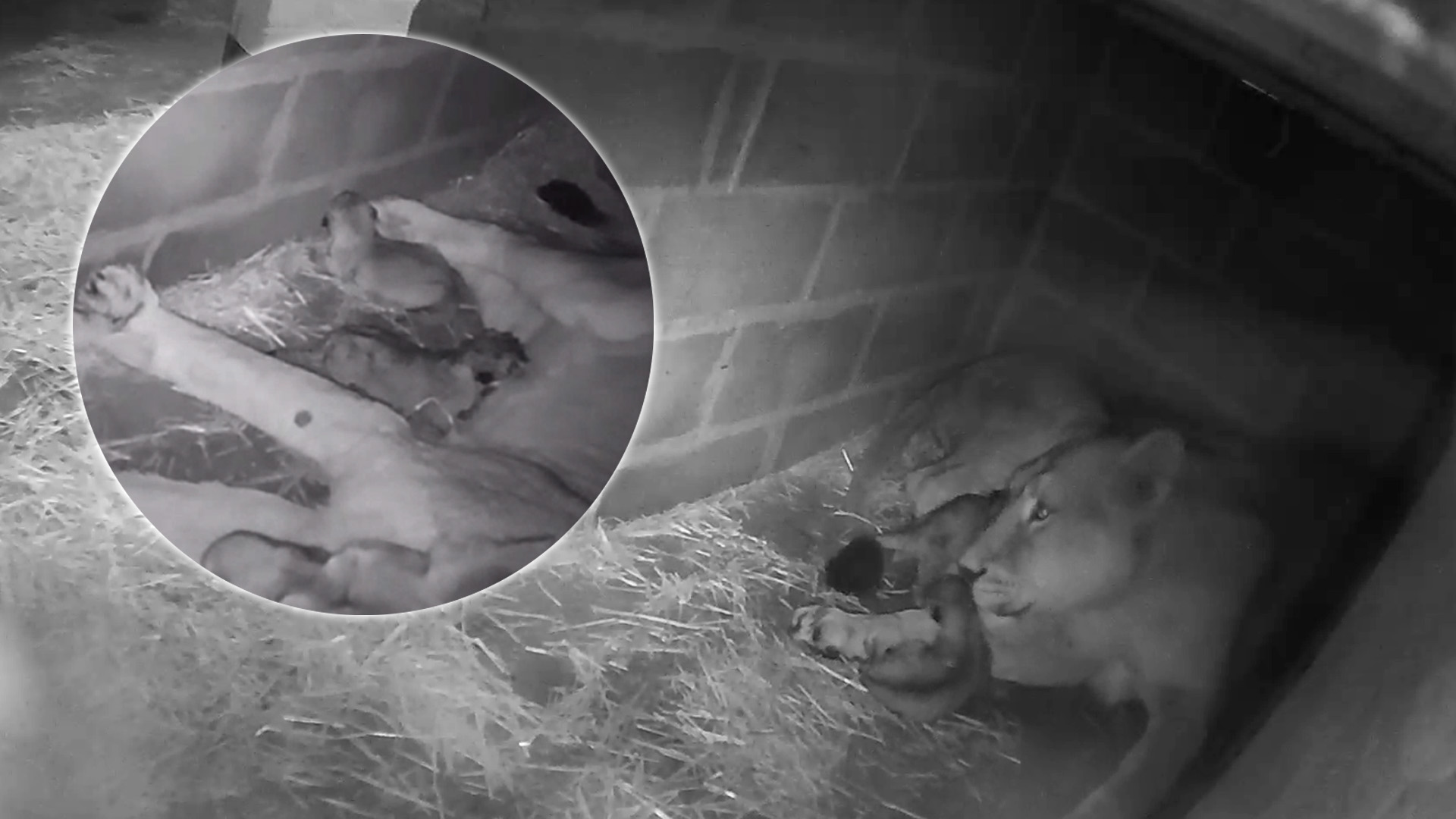
22 Oct 2026
Five minute read

06 Dec 2024
Two minute read
Keep up with our lions
Lions are generally active at night and prefer to rest during the day so you will most likely find Jay snoozing on the camera!
Watch our lion live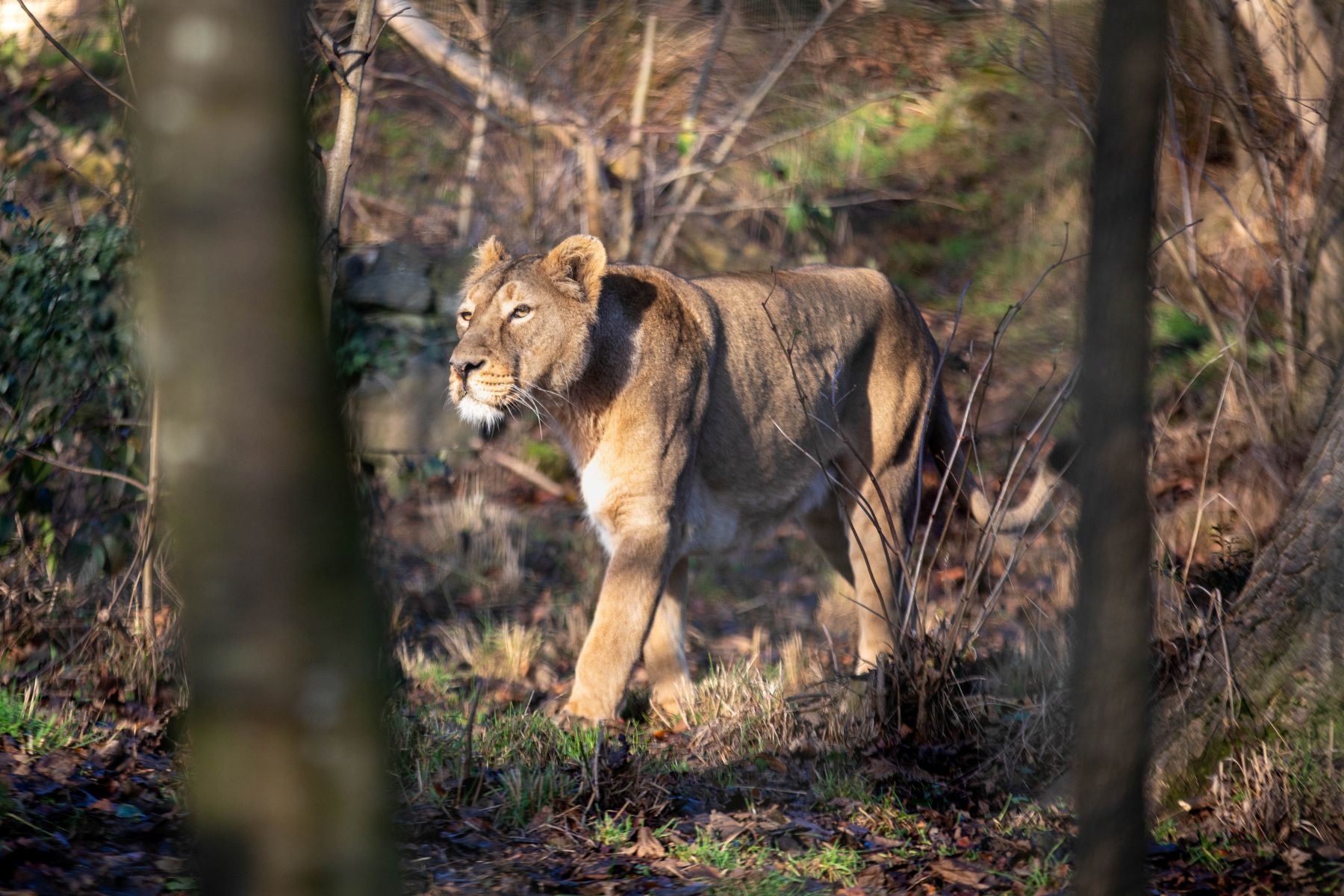
How we're helping
Wild populations of Asiatic lions are in decline due to habitat loss and degradation. Here at RZSS, our lions are part of the European Endangered Species Programme (EEP) which ensures a healthy and genetically diverse population.
Like all the animals in our care, our lions are amazing ambassadors for their relatives in the wild and help hundreds of thousands of people connect with nature every year. They encourage visitors to learn about the threats facing wildlife and the action they can take to help create a world where nature is protected, valued, and loved.
As a wildlife conservation charity, we care for the animals here at the zoo and work to protect species at risk around the world. From providing expertise in genetics and veterinary health to protecting wild places with local conservation partners, and even restoring threatened species to the wild, we are active where we are needed most.
Find out more about RZSS conservation