L'Hoest's monkey
Allochrocebus lhoesti
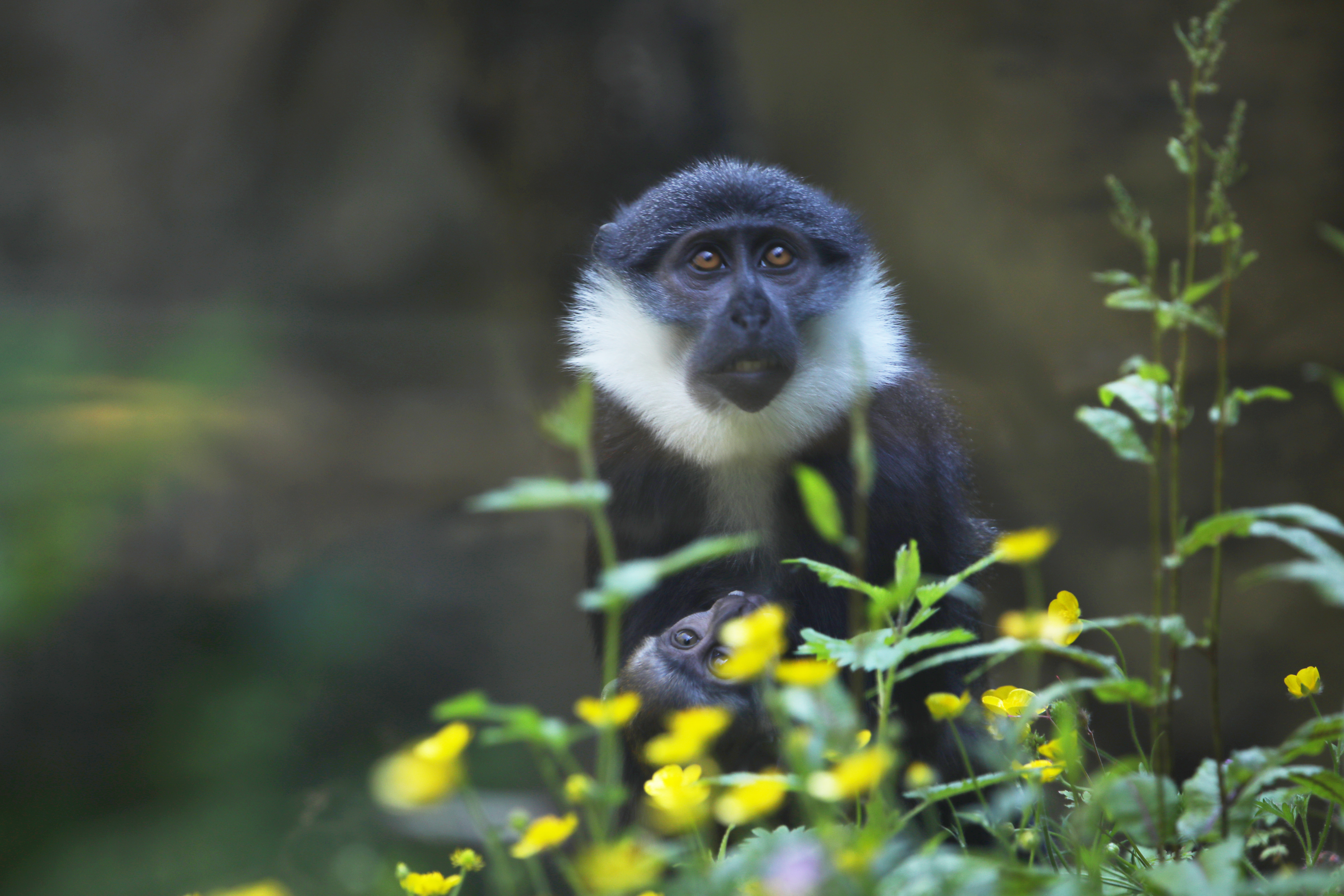
We are home to a small group of L'Hoest's monkeys here at Edinburgh Zoo: Jamal, Kibanzi, Msitu and Shel. A young male was born to the group in September 2025 – his name is Nyota, which is Swahili for ‘star’.
Recognisable by their dark coat and white beard, L'Hoest's monkeys are native to Mountainous tropical rainforests in the Congo Basin.
They are omnivores and spend much of their time on the ground. They have impressive speed, which helps keep them safe from predators. When they sleep, the do so sitting upright in trees, holding onto branches or other L’Hoest’s monkeys.
They are classified as Vulnerable due to deforestation, mining and hunting.
Population

Decreasing
Diet

Omnivore
Habitat

Rainforest
Fact file
L’Hoest’s monkeys are found in the tropical rainforests of the Congo basin’s upper eastern corner
Females give birth to a baby every year following a five-month pregnancy
They spend more time on the ground than most monkeys
L’Hoest’s monkeys can live for up to 20 years
They tend to live in female dominated groups and forge strong bonds through grooming
.jpg)
How we're helping
Like all the animals in our care, our L’Hoest’s monkeys are amazing ambassadors for their relatives in the wild and help hundreds of thousands of people connect with nature every year. They encourage visitors to learn about the threats facing wildlife and the action they can take to help create a world where nature is protected, valued and loved.
As a wildlife conservation charity, we care for the animals here at the zoo and work to protect species at risk around the world. From providing expertise in genetics and veterinary health, to protecting wild places with local conservation partners, and even restoring threatened species to the wild, we are active where we are needed most.
Find out more about RZSS conservation