Pygmy hippo
Choeropsis liberiensis
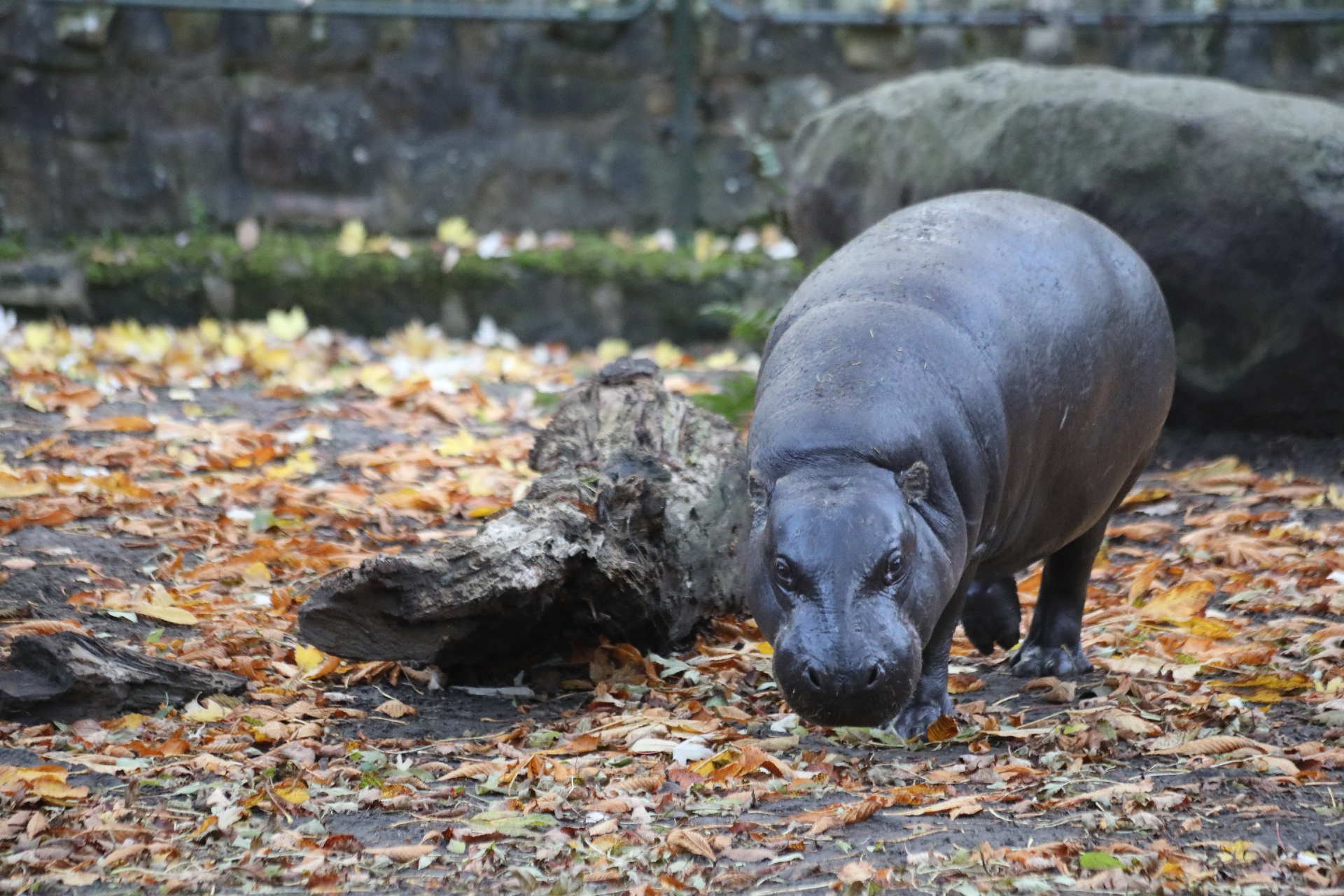
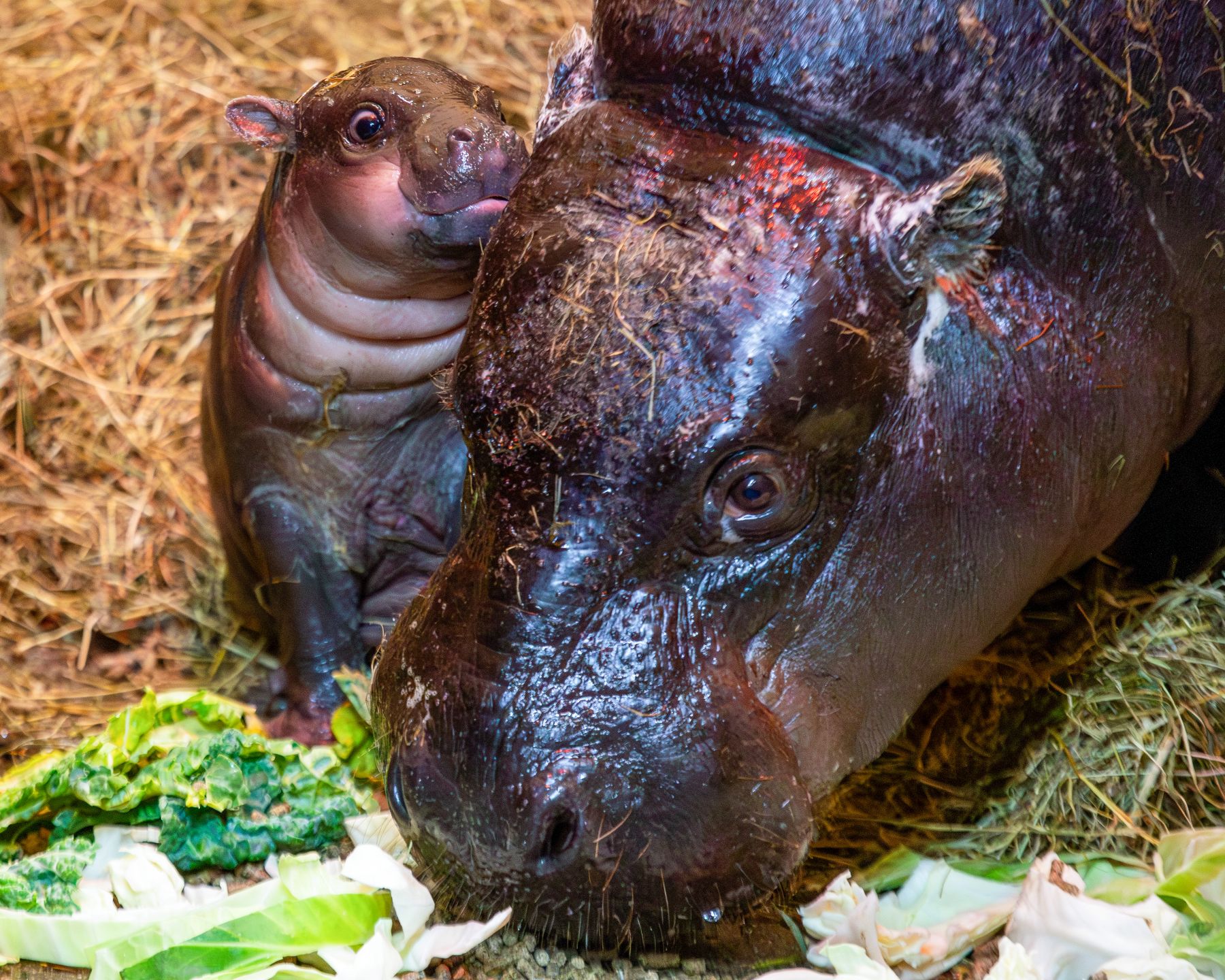
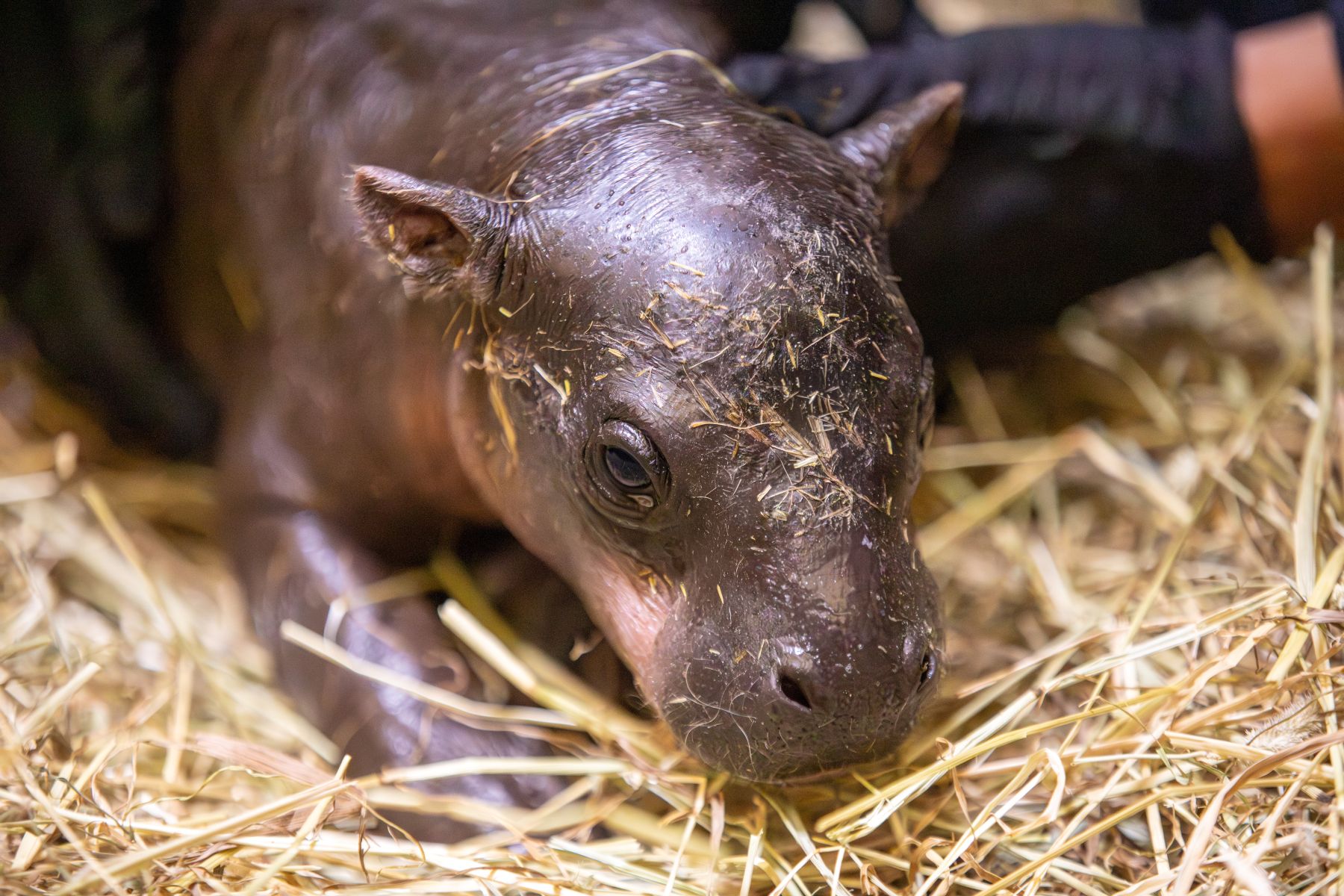
Edinburgh Zoo currently has two adult pygmy hippos - Otto and Gloria. In July, we welcomed a baby calf to the family.
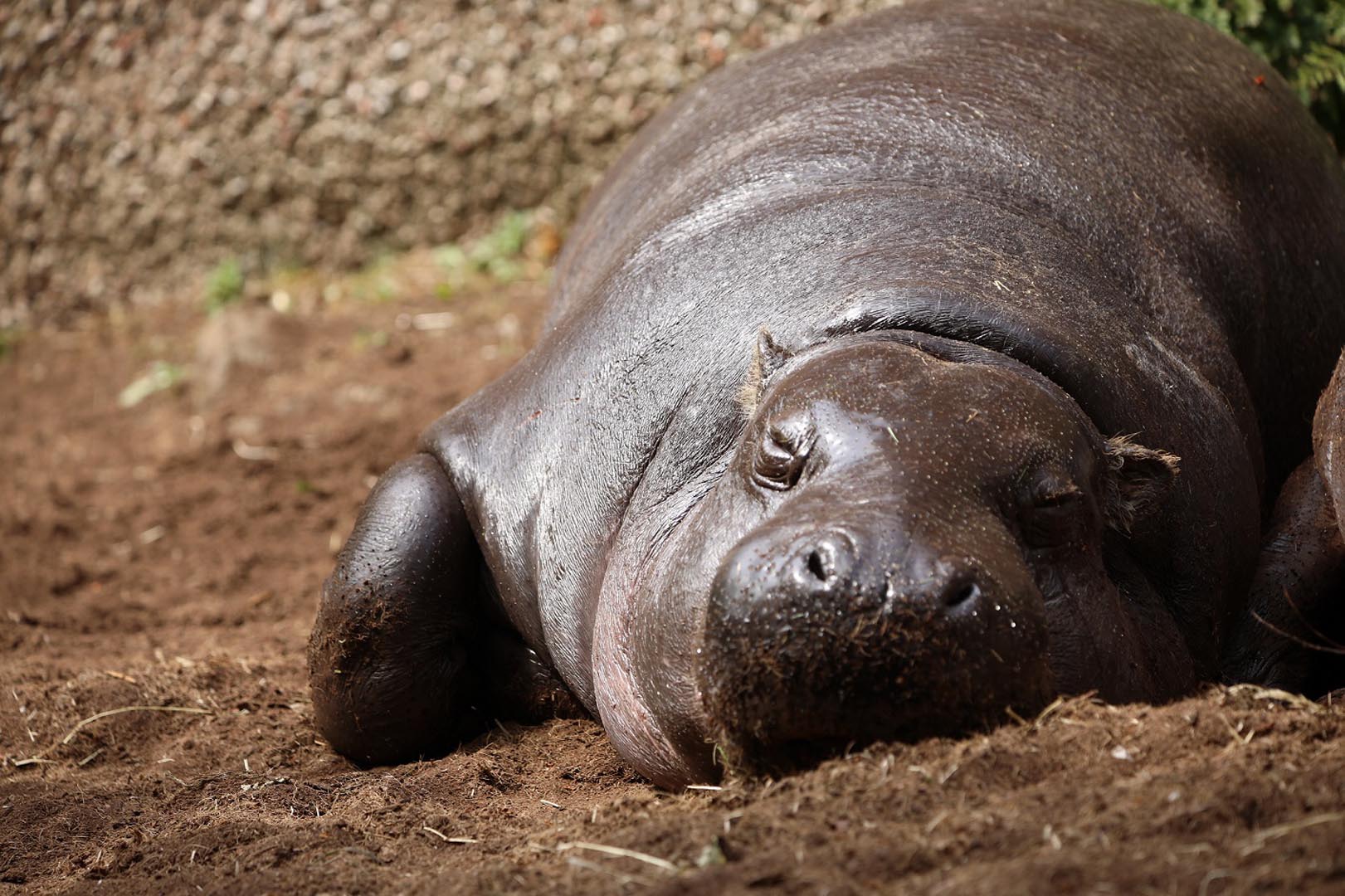
Pygmy hippos are a small species of hippopotamus. Fully grown, they weigh in around 160kg to 270kg. This makes them five-times smaller than common hippos. Despite being small and heavy, they are very speedy animals and can run 18mph.
Pygmy hippos have very sensitive skin. To protect them from the sun, they sweat pink-red goo from glands under the skin. Though some refer to this natural moisturiser as blood sweat, there is no blood in the substance.
They do not spend as much time in water as common hippos. You can see this in their appearance – their nose and eyes do not break the water’s surface. This is because they spend more time on land, wandering through the tropical rainforests.
Pygmy hippos live in the dense, swampy tropical rainforests of West Africa. Most are in Liberia, with smaller populations in Sierra Leone, Guinea and Côte d'Ivoire.
They are classified as Endangered. They are threatened by deforestation through logging and farming and poaching for bushmeat.
Population

Decreasing
Diet

Herbivore
Habitat

Forest
Fact file
The gestation period for these hippos is six months
These can live up to 40 years of age
They can eat up to 68kg of vegetation daily
Fully-grown pygmy hippos weigh between 160kg–270kg
Latest pygmy hippo news
View all news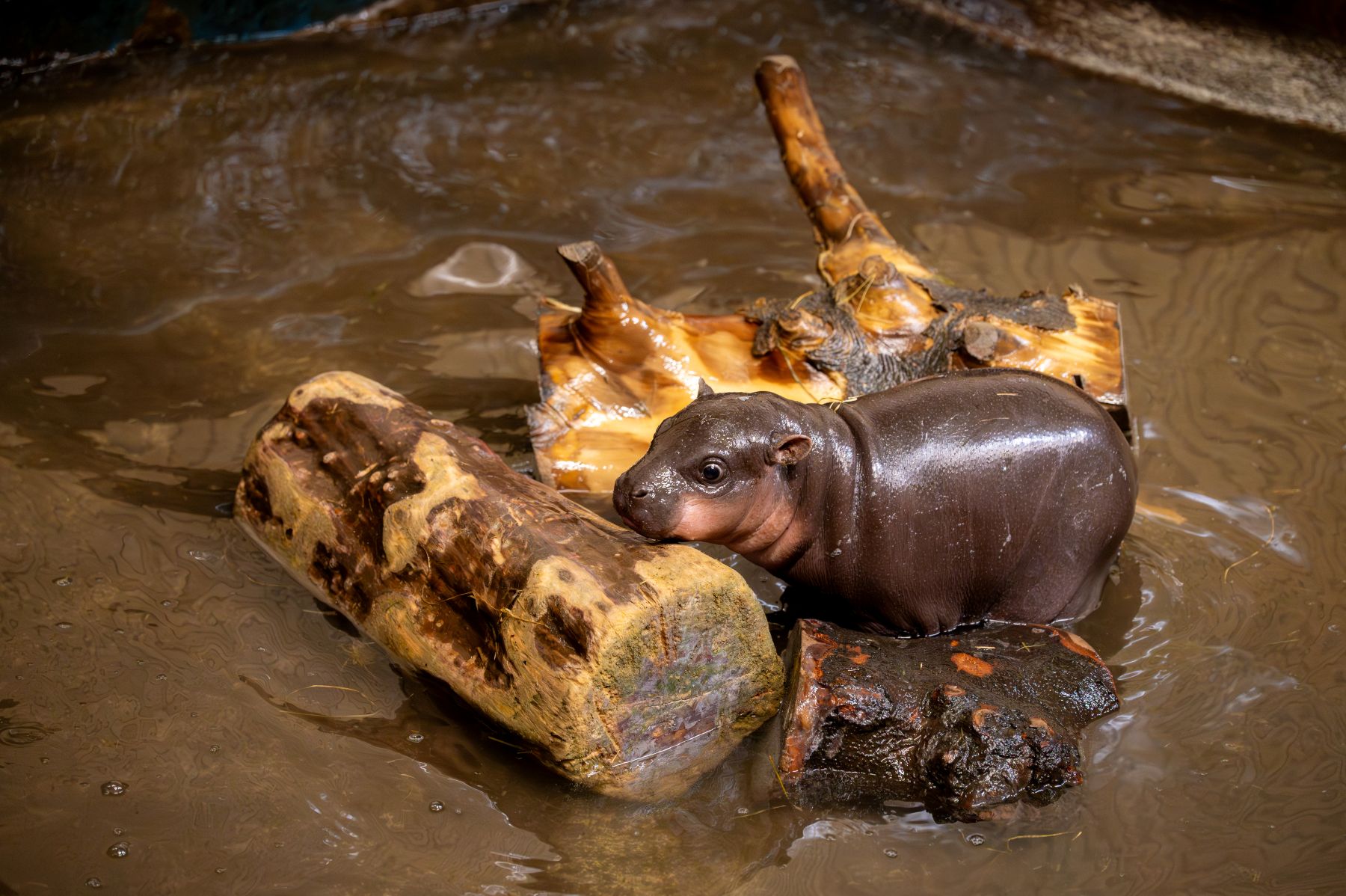
25 Aug 2026
Two minute read
18 Aug 2026
Two minute read
07 Aug 2026
Five minute read
How we're helping
Like all the animals in our care Otto and Gloria are amazing ambassadors for their relatives in the wild and help hundreds of thousands of people connect with nature every year. They encourage visitors to learn about the threats facing wildlife and the action they can take to help create a world where nature is protected, valued and loved.
As a wildlife conservation charity, we care for the animals here at the zoo and work to protect species at risk around the world. From providing expertise in genetics and veterinary health, to protecting wild places with local conservation partners, and even restoring threatened species to the wild, we are active where we are needed most.
Find out more about RZSS conservation