
Buff-cheeked gibbon
Nomascus gabriellae
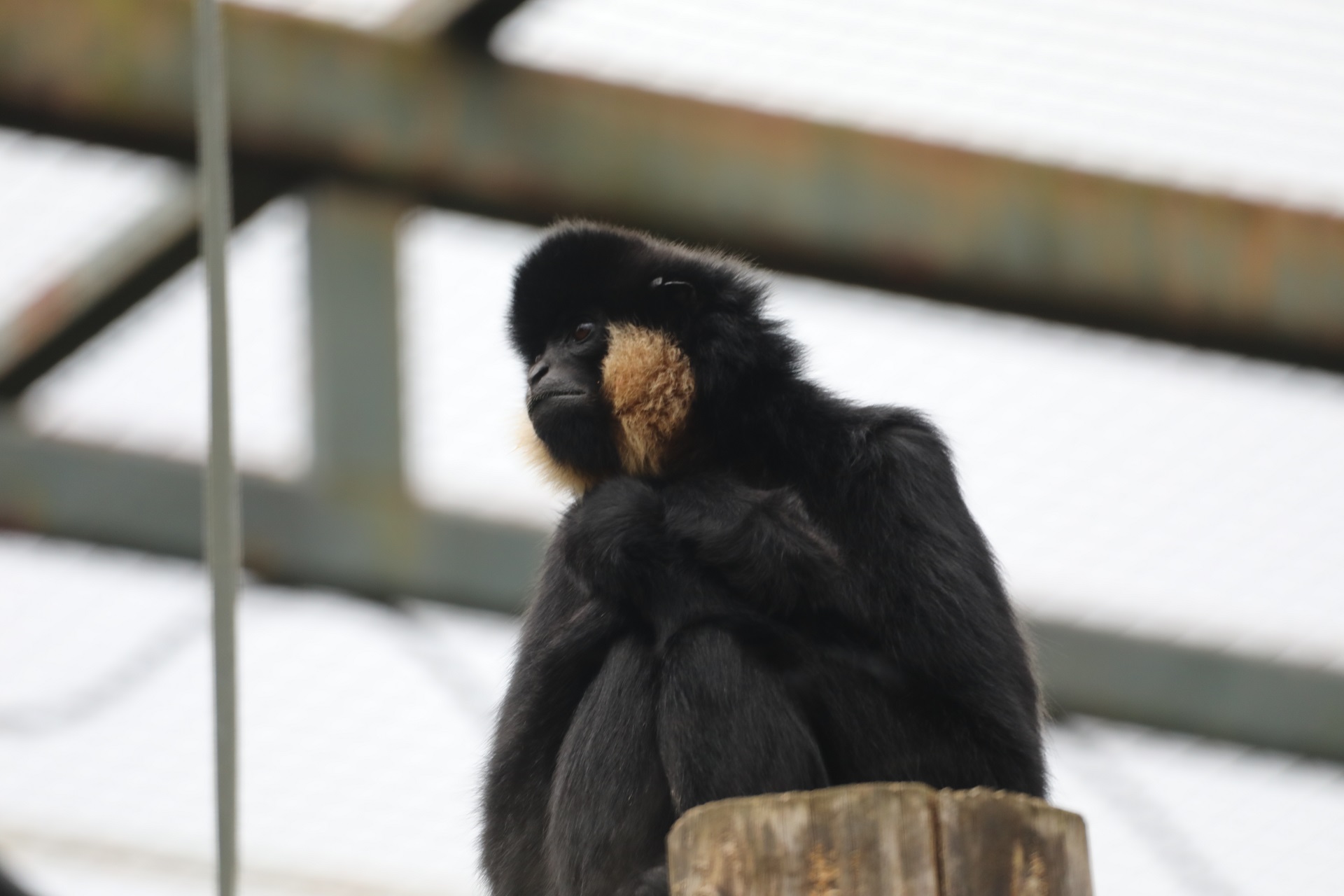
We are home to three buff-cheeked gibbons – Donnie, Jon and Leah.
Gibbons’ arms are much longer than their legs. Using an arm-over-arm swinging movement, they can swing faster through trees than a person can run on the ground.
You can often hear our gibbons’ 'song' in the early morning. It is a distinct and unmistakable mix of long, high-pitched whoops and twitters. On a clear day, the call can travel several kilometres.
Buff-cheeked gibbons are native to Vietnam, Laos and Cambodia. They are classified as Endangered.
Population

Decreasing
Diet

Omnivore
Habitat

Forest
Fact file
Buff-cheeked gibbons move through the trees by swinging with their long arms, a type of movement called brachiation
They can leap 40 feet at speeds of 35 miles per hour while 200 feet above the ground
Buff-cheeked gibbons are small apes from Southeast Asia that live high up in the rainforest trees
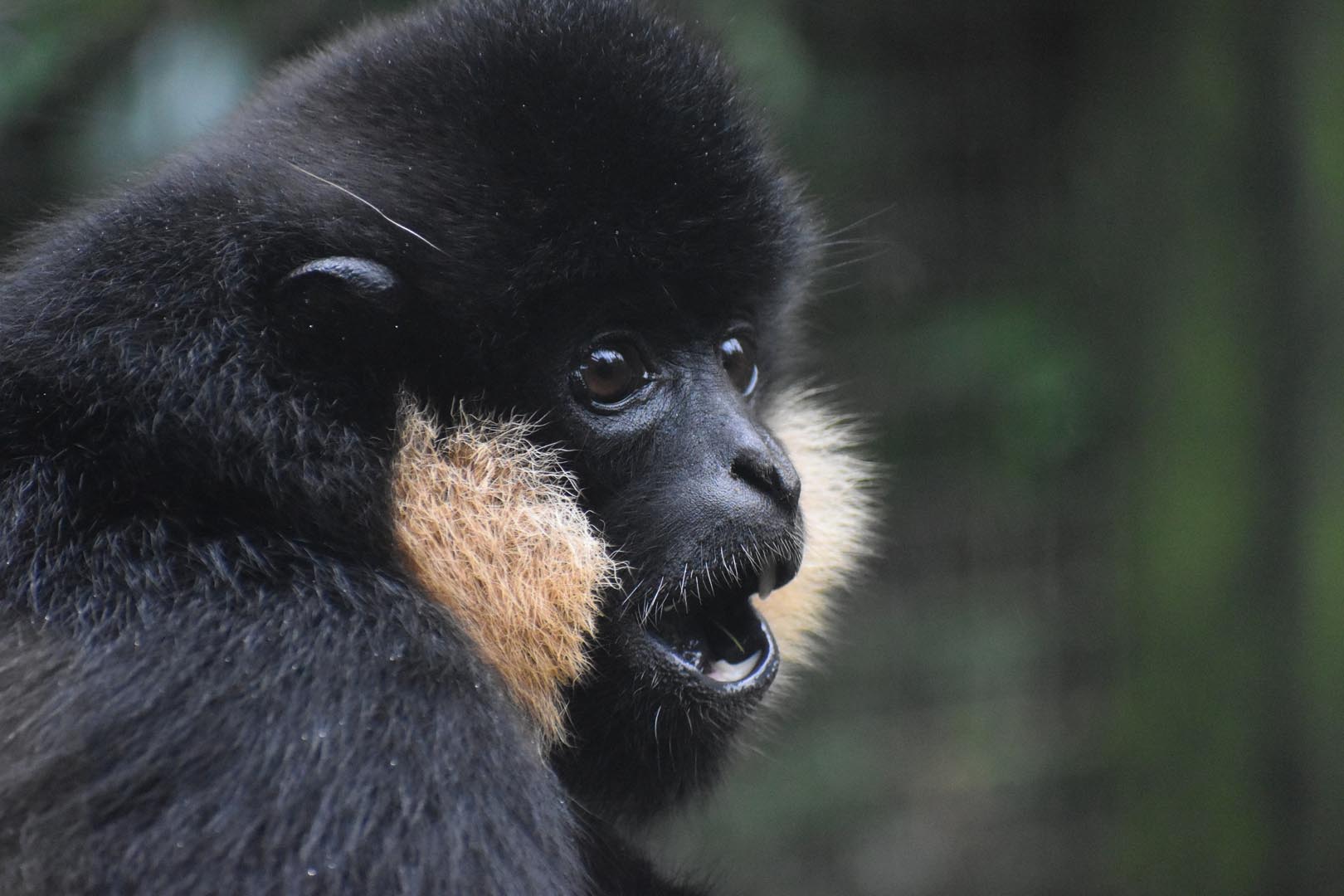
Buff-cheeked gibbons have dark fur with lighter, buff-coloured patches on their cheeks, which help give them their name and make them easy to recognise
How we're helping
Like all the animals in our care, our buff-cheeked gibbons are amazing ambassadors for their relatives in the wild and help hundreds of thousands of people connect with nature every year. They encourage visitors to learn about the threats facing wildlife and the action they can take to help create a world where nature is protected, valued, and loved.
As a wildlife conservation charity, we care for the animals here at the zoo and work to protect species at risk around the world. From providing expertise in genetics and veterinary health, to protecting wild places with local conservation partners, and even restoring threatened species to the wild, we are active where we are needed most.
Find out more about RZSS conservation