Brown capuchin
Sapajus apella apella
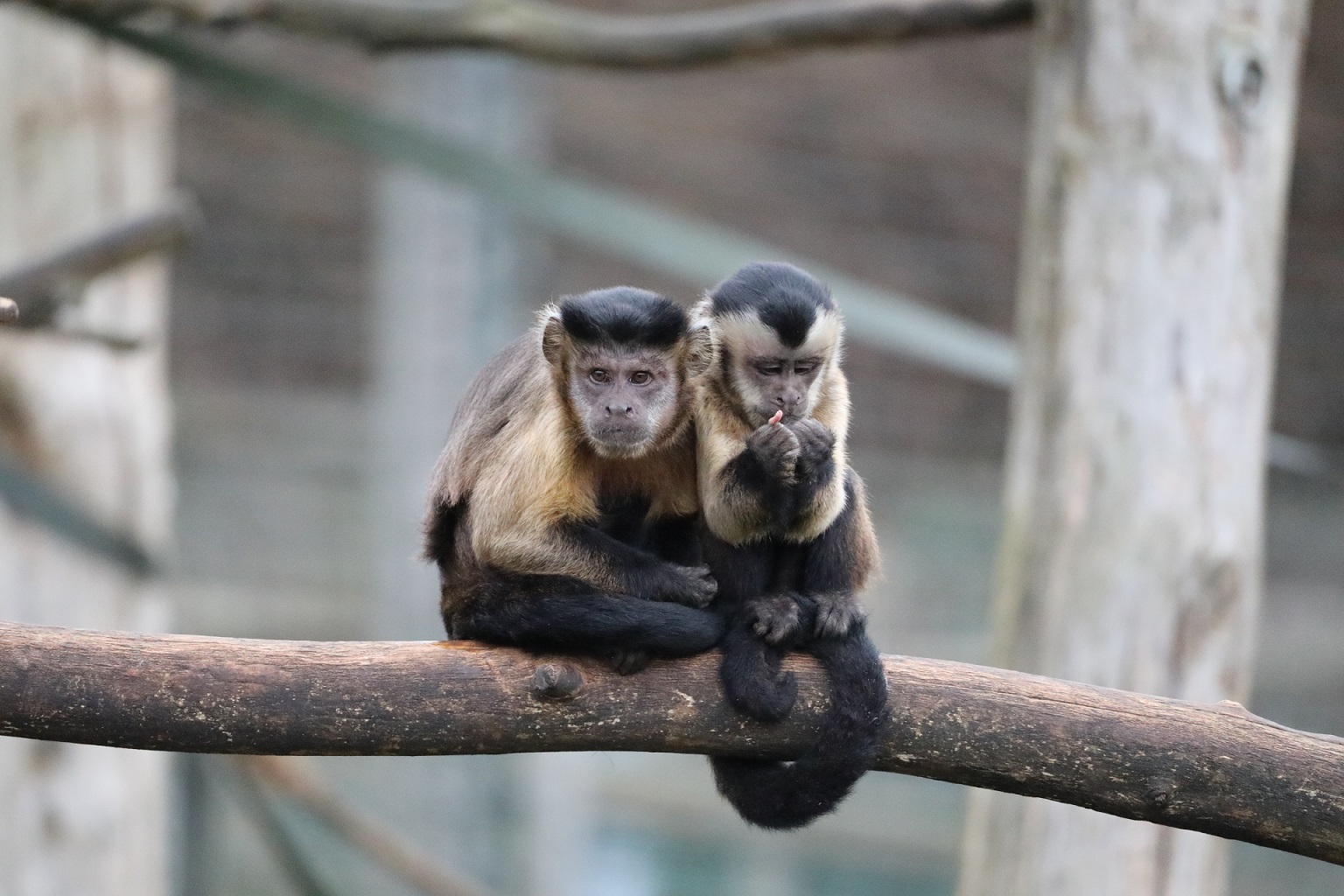
At Edinburgh Zoo, two groups of brown capuchins live in our Living Links enclosure.
Brown capuchins, also called tufted capuchins, come from South American. They come from countries like Colombia, Peru, Bolivia, Brazil and Venezuela.
They are very talkative monkeys! They make lots of different sounds, including calls, screeches, hisses, whistles, growls and rumbles. Each sound has a different meaning - some tell others about food or warn them about danger.
Living Links isn’t just fun for visitors. It’s also a special research centre where scientists study primates. The centre runs through a unique partnership between the Royal Zoological Society of Scotland and the University of St Andrews.
Population

Decreasing
Diet

Omnivore
Habitat

Rainforest
Fact file
Brown capuchins typically weigh in at between 2-5kg
Group sizes can be up to 30, but average around 18 individuals
These cheeky characters can live up to 45 years in zoos
Brown capuchins use a wide variety of facial expressions to communicate to each other, including raising their eyebrows when flirting with a mate
These monkeys have been seen using tools such as sticks to obtain food
Capuchins love chillies – not for the taste though, they rub them all over themselves as an insect repellent!
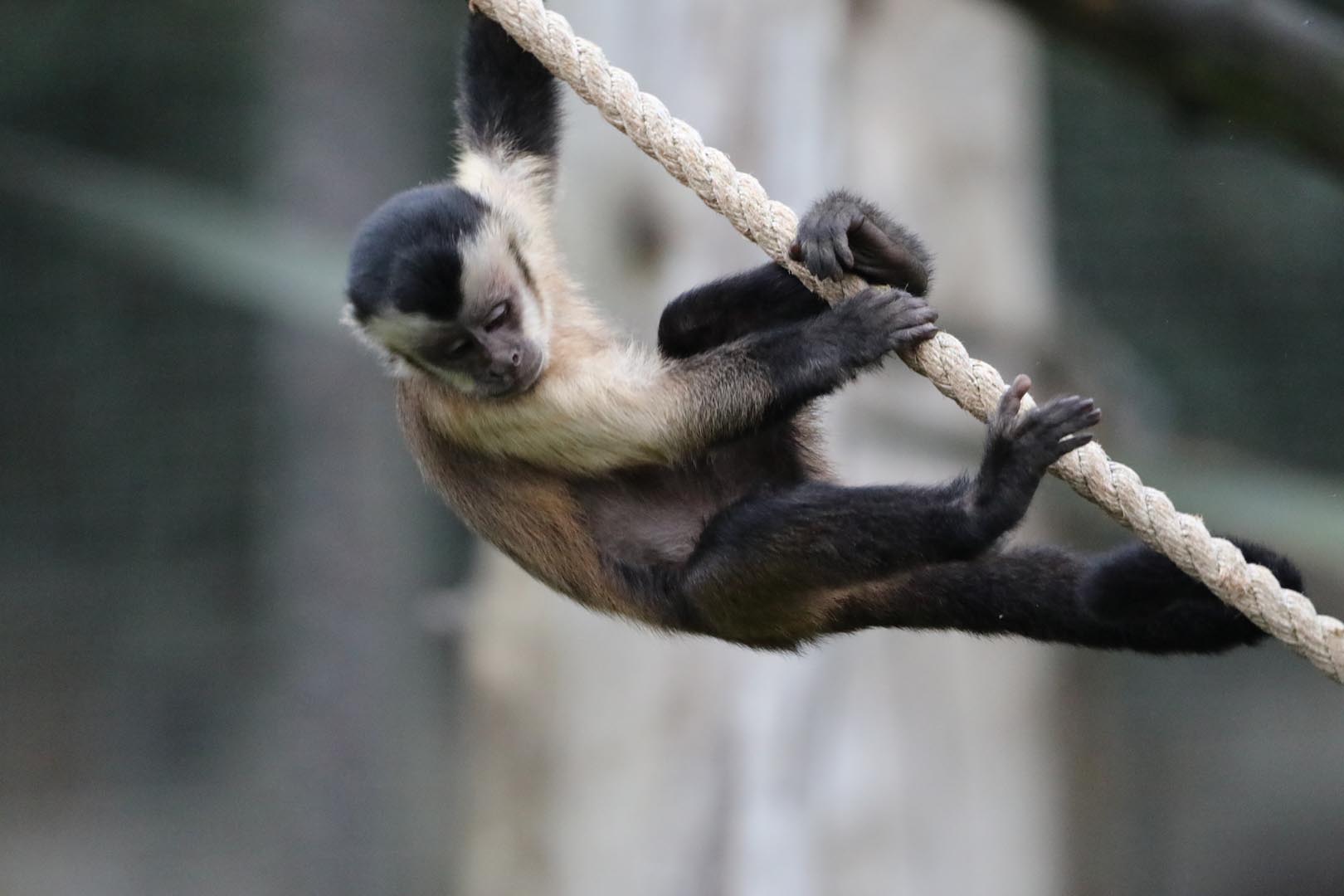
How we're helping
Like all the animals in our care our brown capuchins are amazing ambassadors for their relatives in the wild and help hundreds of thousands of people connect with nature every year. They encourage visitors to learn about the threats facing wildlife and the action they can take to help create a world where nature is protected, valued and loved.
As a wildlife conservation charity, we care for the animals here at the zoo and work to protect species at risk around the world. From providing expertise in genetics and veterinary health, to protecting wild places with local conservation partners, and even restoring threatened species to the wild, we are active where we are needed most.
Find out more about our Living Links project