Greater one-horned rhinoceros
Rhinoceros unicornis
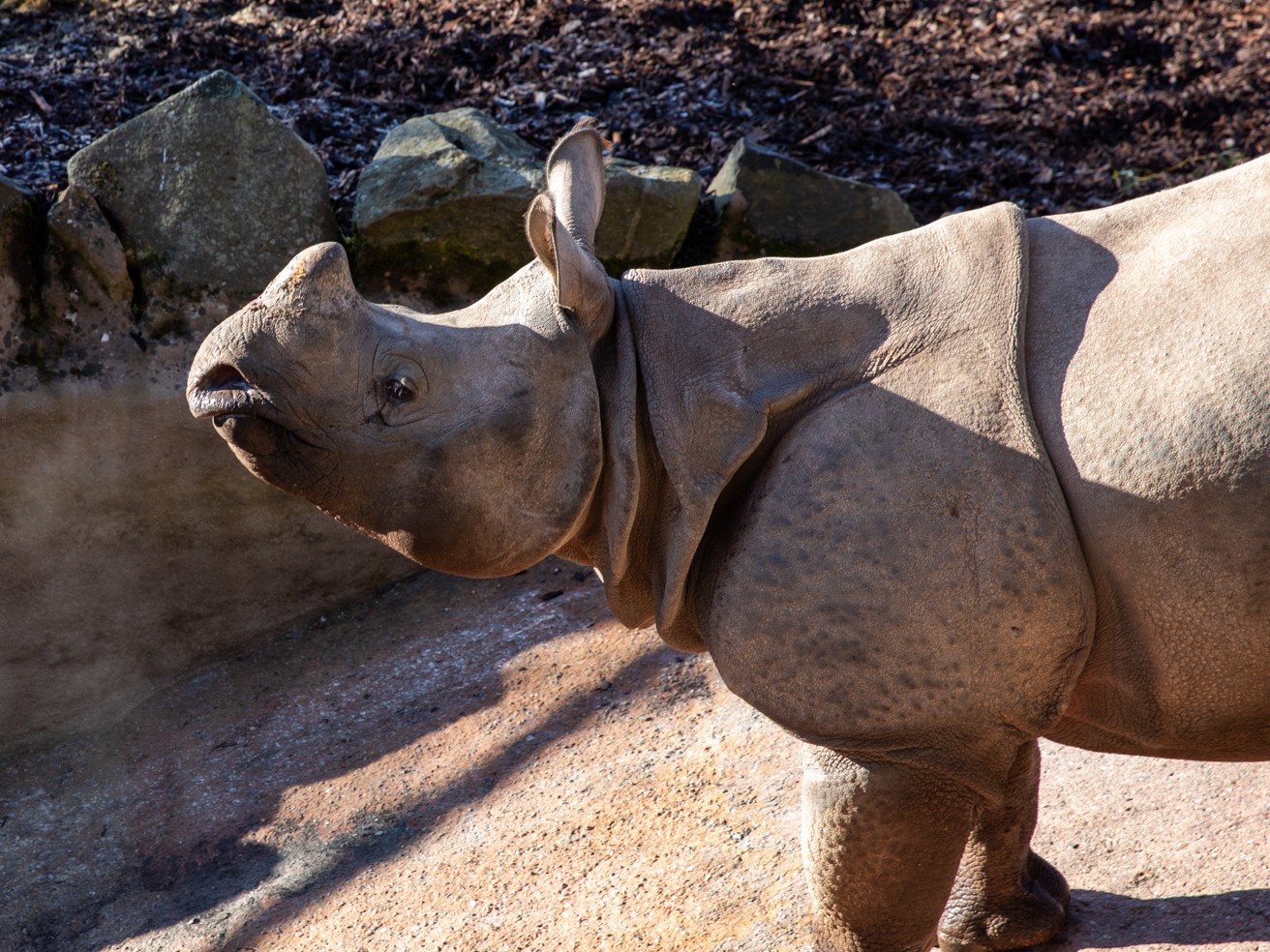
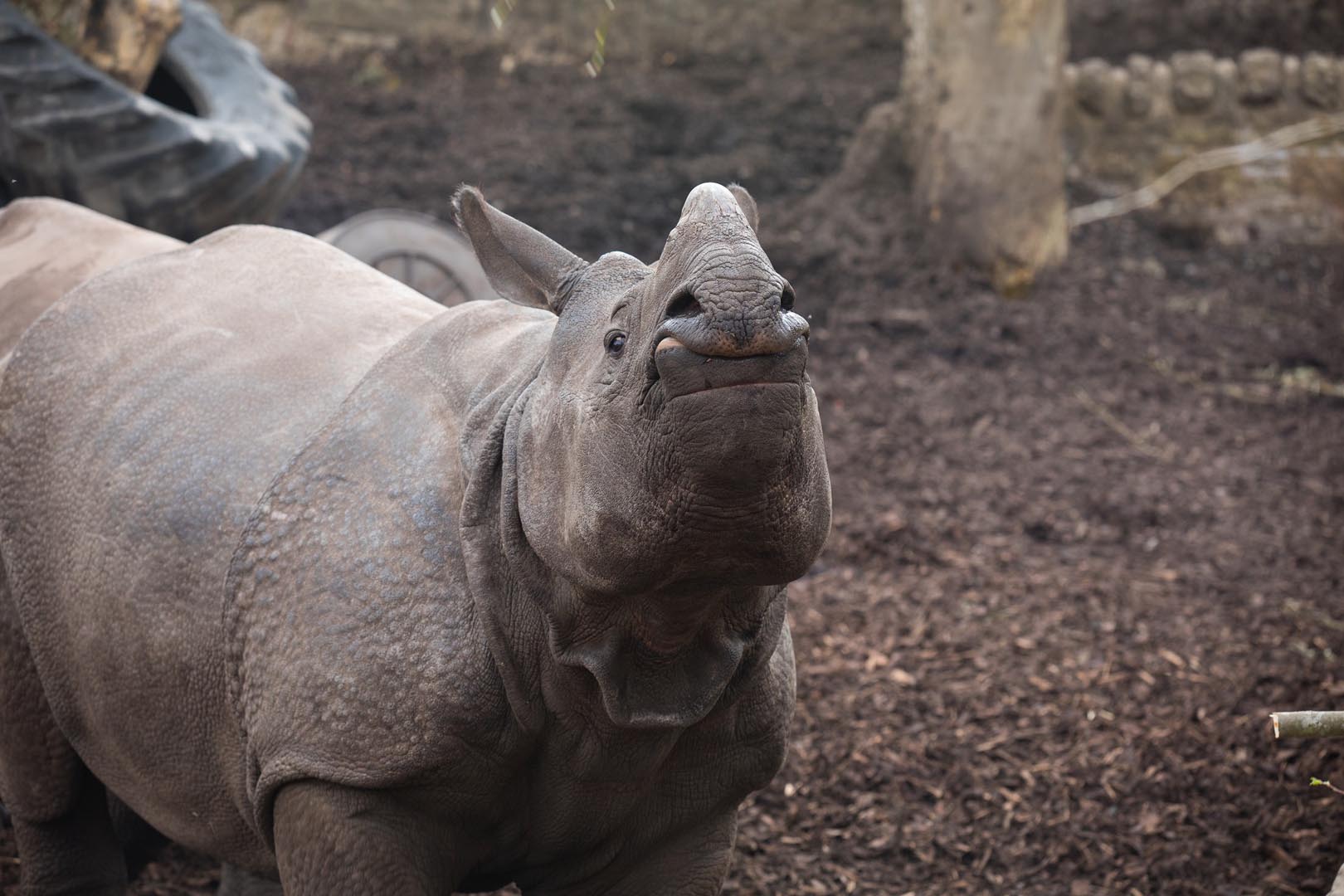
We have one greater one-horned rhinoceros at Edinburgh Zoo, male Jai.
Jai was born in 2022 and joined the zoo on April Fool’s Day 2026 from Fota Wildlife Park, Ireland.
The greater one-horned rhinoceros is also known as the Indian rhino. They have thick, armour-like grey skin folds and a single horn.
The horn is used for foraging rather than fighting. It is made of keratin, which is the same protein as human hair and nails, and can grow to be 60cm long.
Greater one-horned rhinos are native to India and Nepal. They live in grasslands, swamps and forests, and often bathe to keep cool.
Once facing near-extinction, the wild population of greater one-horned rhinos is in recovery. This is due to dedicated conservation efforts, though they are still listed as Vulnerable. Major threats include poaching and habitat loss.
Population

Increasing
IUCN August 2018
Diet

Herbivore
Habitat

Grasslands
Fact file
Males can weigh up to 2,700kg
Despite their size, they’re great swimmers and can dive and feed underwater
Their thick, folded skin makes them look like they’re wearing a suit of medieval armour, but it’s actually soft and sensitive underneath
The greater one-horned rhino sports a single black horn, which is made of keratin - the same stuff as our nails and hair!
Latest rhino news
View all news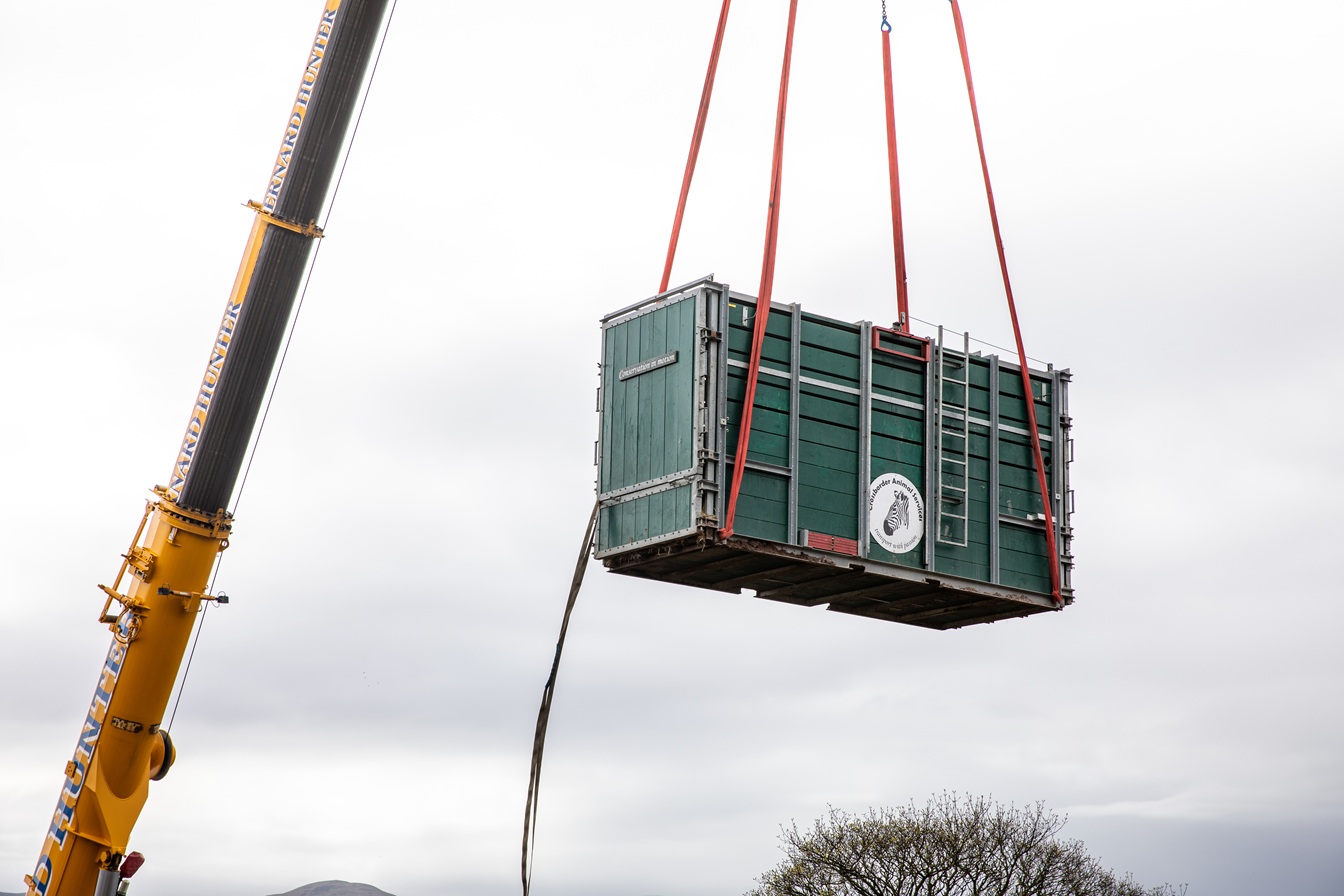
01 Apr 2026
One minute read
26 Sep 2025
Four minute read
How we're helping
Like all the animals in our care, Jai is an amazing ambassador for his relatives in the wild and helps hundreds of thousands of people connect with nature every year. They encourage visitors to learn about the threats facing wildlife and the action they can take to help create a world where nature is protected, valued and loved.
As a wildlife conservation charity, we care for the animals here at the zoo and work to protect species at risk around the world. From providing expertise in genetics and veterinary health, to protecting wild places with local conservation partners, and even restoring threatened species to the wild, we are active where we are needed most.
Find out more about RZSS conservation