Banteng
Bos javanicus javanicus
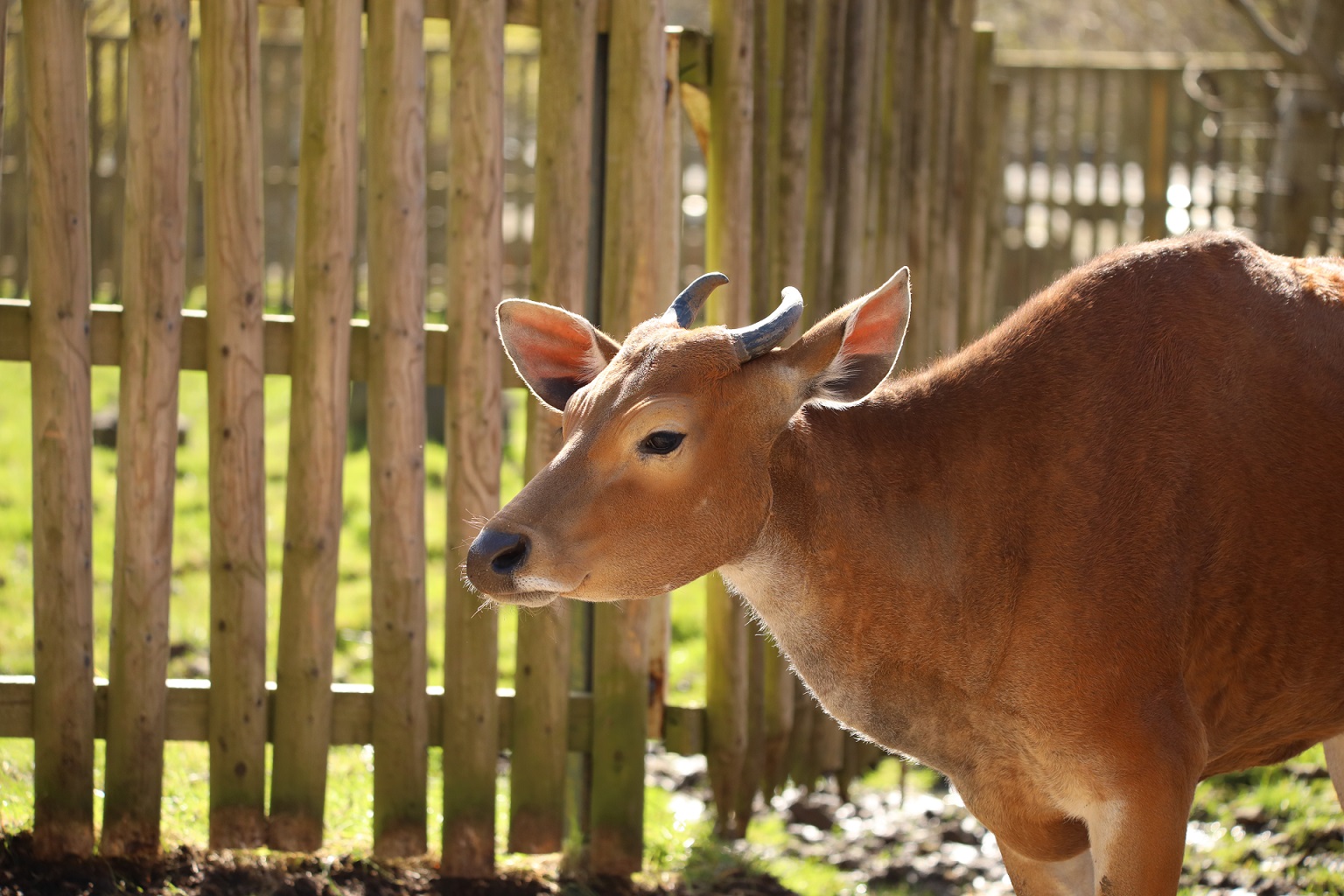
We are currently home to four banteng. One male called Struan, and three females, Kiley, Kartika and Raya.
Banteng are wild cattle from Southeast Asia. They are easy to spot because of the white 'stockings' on their legs. They still live in countries like Cambodia, Thailand and Vietnam. They have disappeared from India, Bangladesh and Brunei.
Banteng are important for their homes in the wild. They help plants grow by spreading seeds in their poo and they are part of the food chain that keeps nature balanced.
There are fewer than 8,000 banteng left in the wild, and their numbers have dropped by more than half in the past 22 years. They face many dangers, like losing their homes, being hunted for their meat and horns and mixing with domestic cattle. Sometimes, diseases from farm animals can also make wild banteng sick.
Conservation groups are working to help. Young bantengs bred in captivity are being released into areas of Thailand where they had disappeared.
Population

Decreasing
Diet

Herbivore
Habitat

Grasslands
Fact file
Banteng are also known as the tembadau
They are found throughout south east Asia including Cambodia, Indonesia, Malaysia, Thailand and Vietnam
The banteng is the second endangered species to be successfully cloned, following the cloning of the gaur
Banteng are part of the Bovidae family, which they share with bison and buffalo
Banteng are social animals, living in herds of up to 40 animals
How we're helping
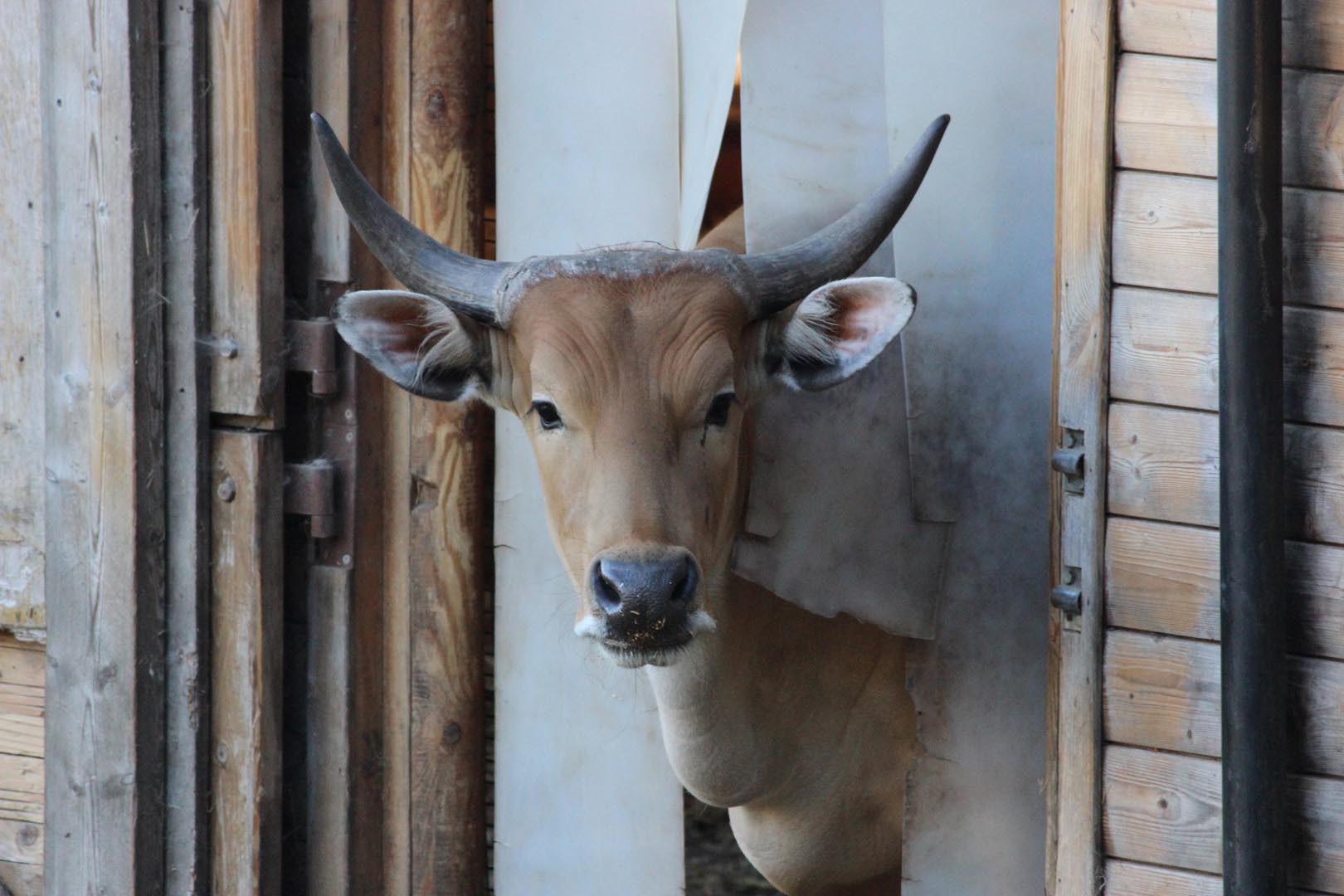
Like all the animals in our care Struan, Kiley, Kartika and Raya are amazing ambassadors for their relatives in the wild and helps hundreds of thousands of people connect with nature every year. They encourage visitors to learn about the threats facing wildlife and the action they can take to help create a world where nature is protected, valued and loved.
As a wildlife conservation charity, we care for the animals here at the zoo and work to protect species at risk around the world. From providing expertise in genetics and veterinary health, to protecting wild places with local conservation partners, and even restoring threatened species to the wild, we are active where we are needed most.
Find out more about RZSS conservation