Cape porcupine
Hystrix africaeaustralis
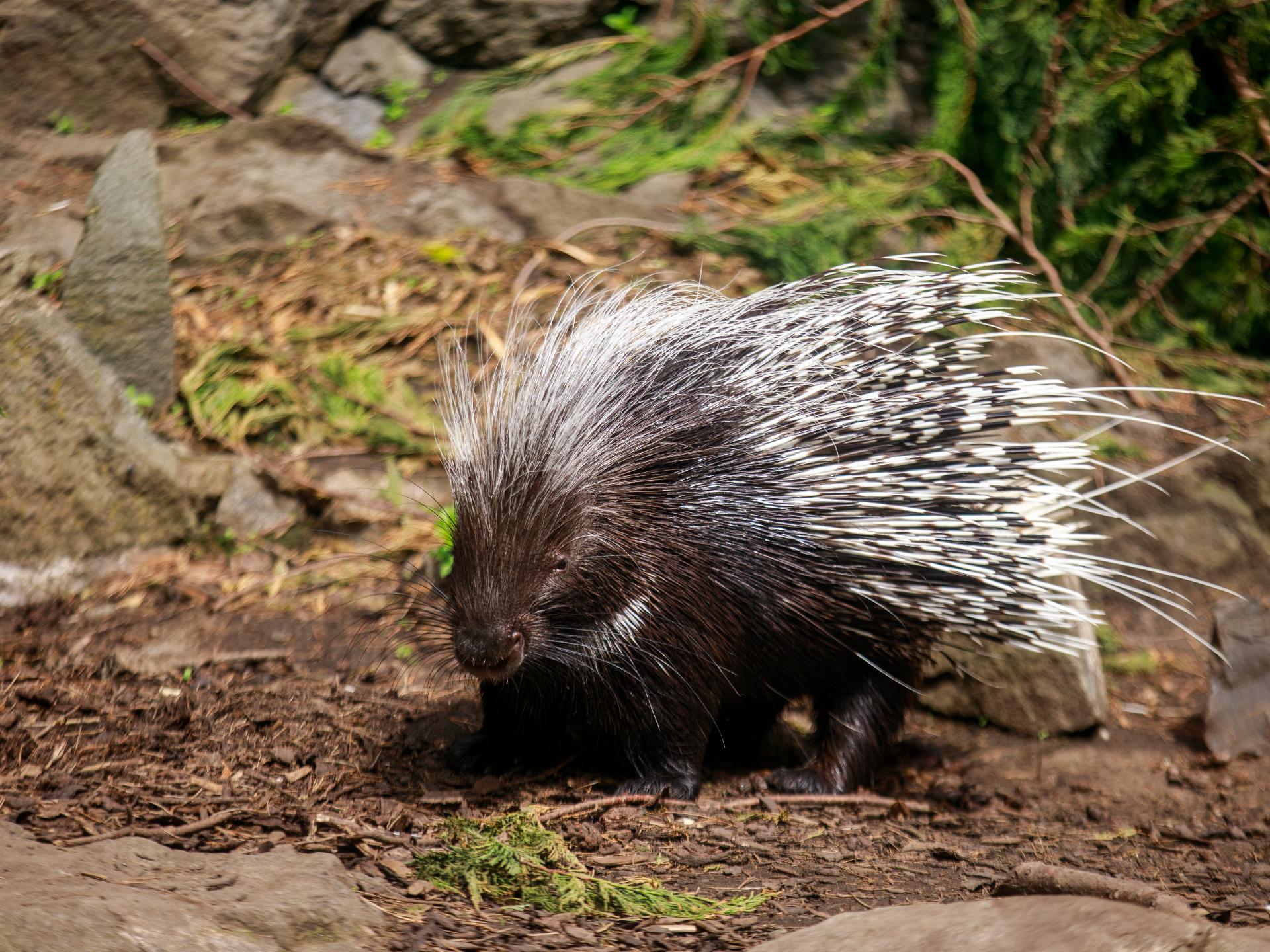
We have two Cape porcupines here at Edinburgh Zoo, a male named Rick and a female named Zahara.
The Cape porcupine is the largest porcupine species. They are found across southern and central Africa. They live in habitats ranging from savannah and grassland to forests and rocky areas.
Long, sharp quills which can reach up to 50 cm in length cover their bodies. These quills are for defence. It is not true that porcupines can throw or shoot these quills. When threatened, a Cape porcupine will raise its quills, rattle hollow tail quills and charge backwards to see off predators.
The Cape porcupine is not currently considered at threat. Yet, like many animals, it still faces local pressures such as habitat loss, hunting and persecution as a pest.
Population

Unknown
Diet

Herbivore
Habitat

Grasslands
Fact file
If cornered, the Cape porcupine can stab its attacker with its 50cm long quills
Hollow spines on their tail make a rattling sound to scare predators
.jpg)
How we're helping
Like all the animals in our care Rick and Zahara are amazing ambassadors for their relatives in the wild and help hundreds of thousands of people connect with nature every year. They encourage visitors to learn about the threats facing wildlife and the action they can take to help create a world where nature is protected, valued and loved.
As a wildlife conservation charity, we care for the animals here at the zoo and work to protect species at risk around the world. From providing expertise in genetics and veterinary health, to protecting wild places with local conservation partners, and even restoring threatened species to the wild, we are active where we are needed most.
Find out more about RZSS conservation