Binturong
Arctictis binturong
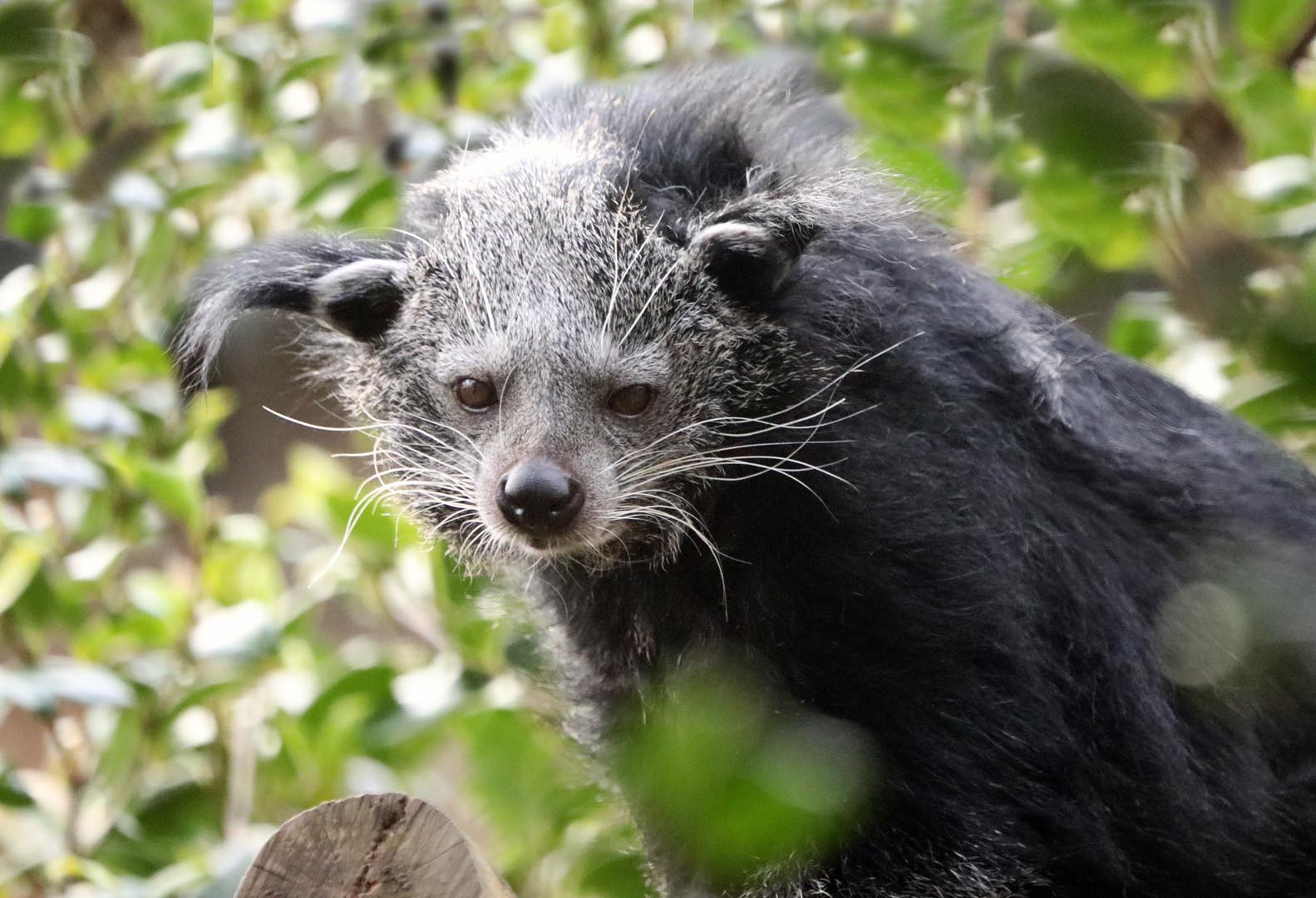
We have two binturong: a male named Tenzin and a female named Teshi.
You can spot Tenzin and Teshi in their habitat next to our Pallas's cat, Akiko.
Binturong are amazing animals with a mix of interesting features. They have short legs, sharp claws, a long tail that can grab things, round ears and a nose that turns up at the end. Sometimes people call them 'bear-cats,' and their scientific name, Arctictis, means “bear-weasel.” But they are not bears or weasels! They are actually related to civets and genets.
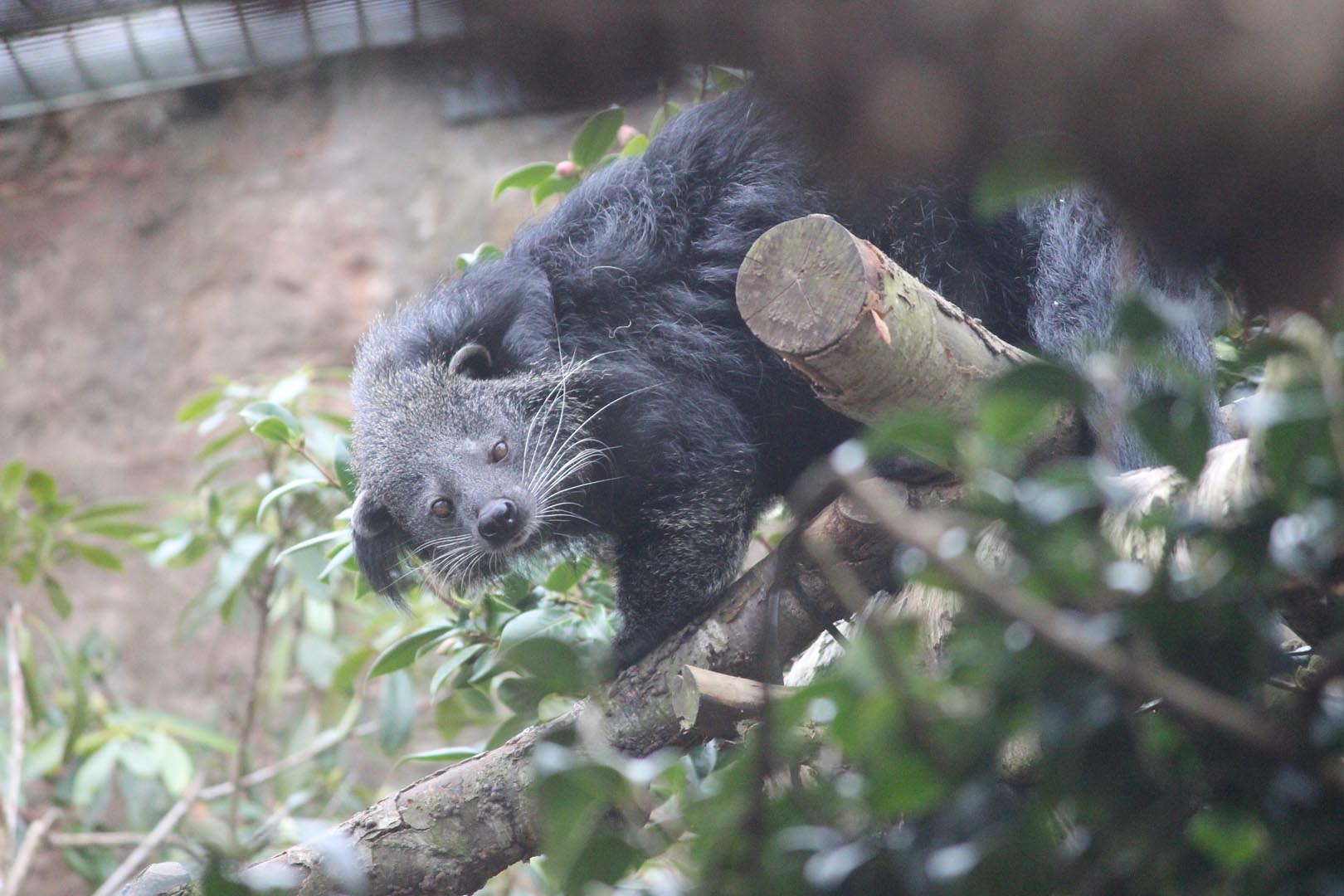
Binturong are arboreal, meaning that they live in trees. They eat both plants and animals, so they are omnivores.
They come from South and Southeast Asia and are listed as Vulnerable because their numbers are falling. Their biggest threats are losing their forest homes, being hunted for meat and being taken for the wildlife trade.
Population

Decreasing
Diet

Omnivore
Habitat

Rainforest
Fact file
Binturongs walk flat-footed, like bears and people. This results in an ambling side-to-side gait
They can rotate their hind legs so their claws still have a grip when climbing down a tree head-first and also use their gripping tail as a brake when running down trees
They smell like popcorn!
How we're helping
Like all the animals in our care, our binturong is an amazing ambassador for his relatives in the wild and help hundreds of thousands of people connect with nature every year. Tenzin encourages visitors to learn about the threats facing wildlife and the action they can take to help create a world where nature is protected, valued and loved.
As a wildlife conservation charity, we care for the animals here at the zoo and work to protect species at risk around the world. From providing expertise in genetics and veterinary health, to protecting wild places with local conservation partners, and even restoring threatened species to the wild, we are active where we are needed most.
Find out more about?RZSS conservation
Find out more about RZSS conservation