Waldrapp ibis
Geronticus eremita
.jpg)
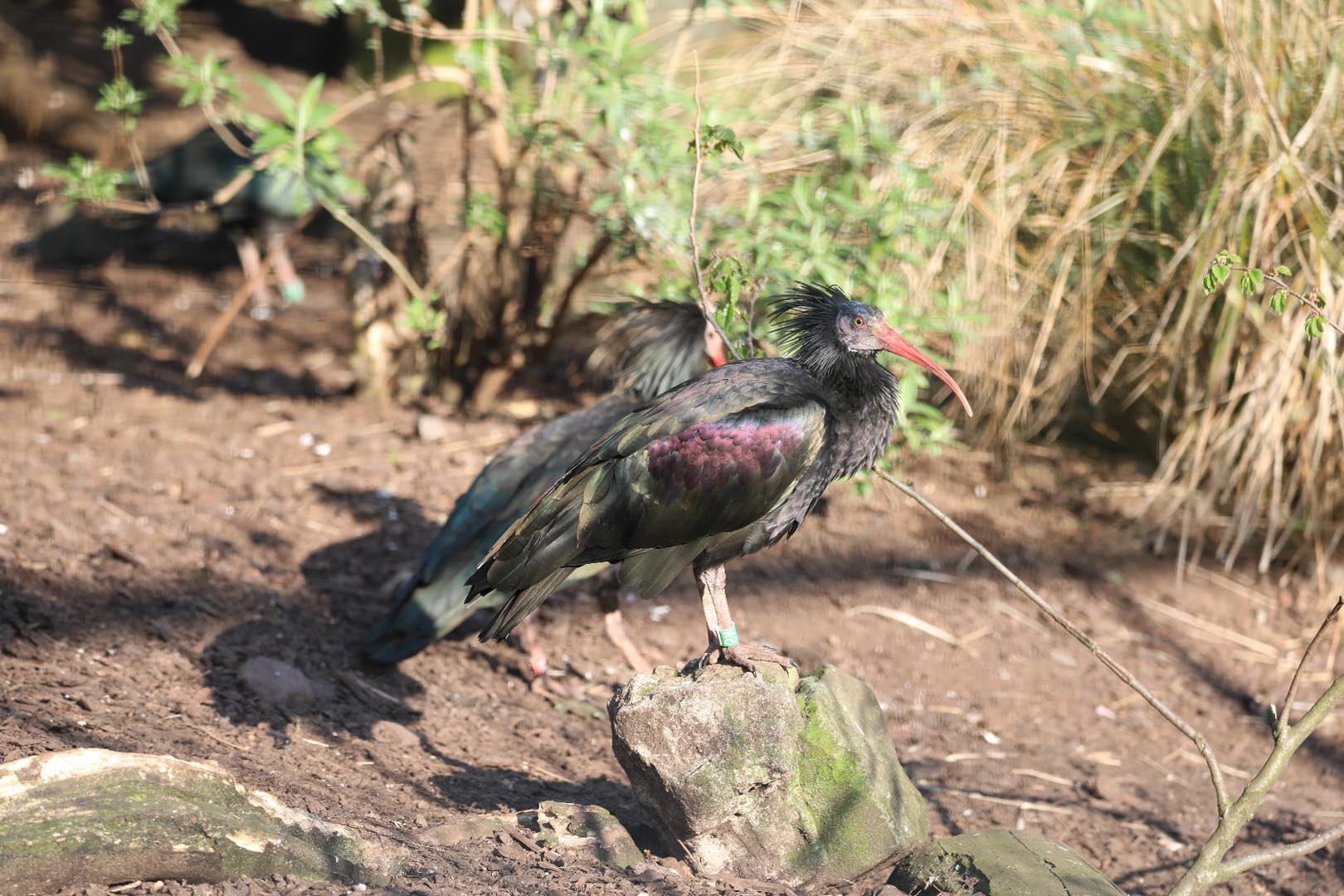
We have a flock of Waldrapp ibis, whose names all begin with a 'W' – like Wonka, Wilhelmina and Wanda!
They are also known as Northern bald ibis. They are a striking bird with black feathers that shimmer green or purple in sunlight. It has a long, curved red bill and bare red skin on its head and face.
These birds live in semi-arid areas, cliffs, and open grasslands, often near water, where they can find insects, small reptiles and other invertebrates to eat.
Waldrapp ibises are social birds that nest in colonies on cliffs and are strong fliers. They often return to the same nesting sites year after year.
They are endangered. Fewer than 1,000 left in the wild and conservation programmes are working to protect them.
Population

Stable
Diet

Carnivore
Habitat

Coastal
Fact file
Waldrapp ibis are monogamous meaning they only have one mate during their lifetime
On a sunny day you might spot them opening their wings and tilting towards the sun in order to sun-bathe
How we're helping
Like all the animals in our care, our Waldrapp ibises are amazing ambassadors for their relatives in the wild and help hundreds of thousands of people connect with nature every year. They encourage visitors to learn about the threats facing wildlife and the action they can take to help create a world where nature is protected, valued, and loved.
As a wildlife conservation charity, we care for the animals here at the zoo and work to protect species at risk around the world. From providing expertise in genetics and veterinary health, to protecting wild places with local conservation partners, and even restoring threatened species to the wild, we are active where we are needed most.
Find out more about RZSS conservation