Eastern white pelican
Pelecanus onocrotalus
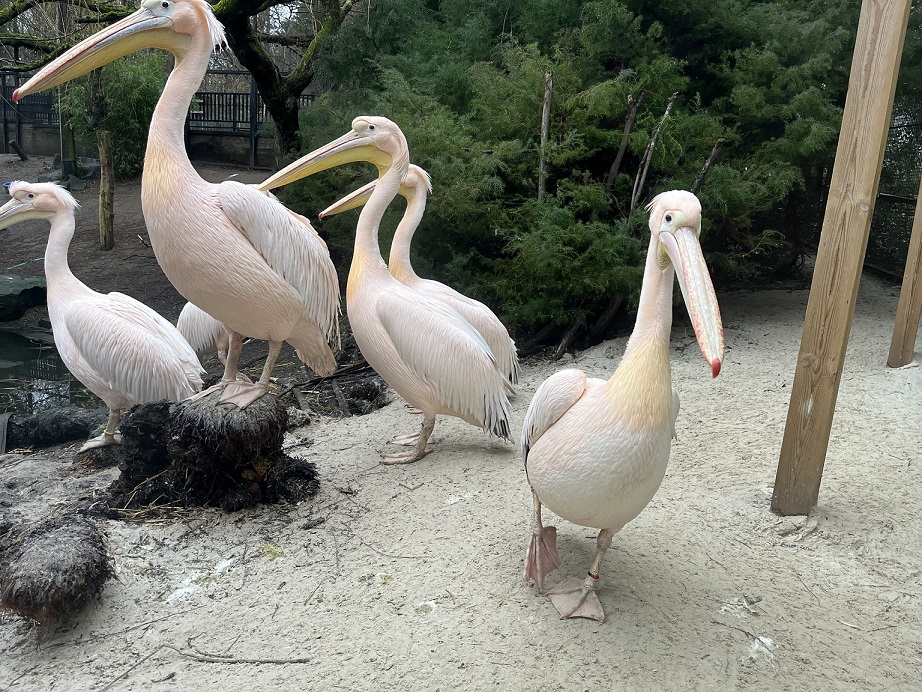
We are currently home to a small group of Eastern white pelicans. There are four males, Timo, Rukwa, Wilu and Samson, and three females, Rosy, Agnese and Shala.
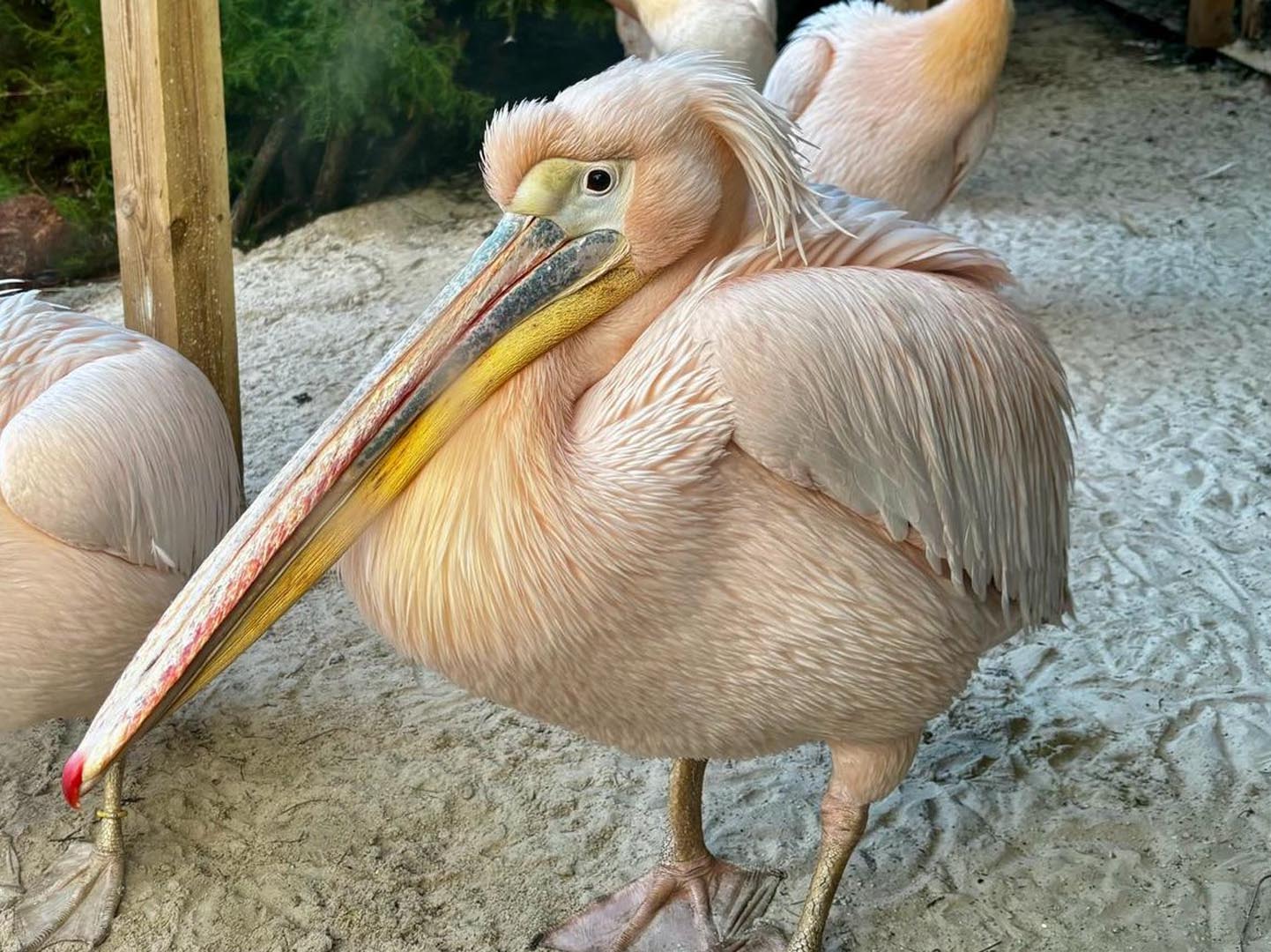
Eastern white pelicans are among the largest birds in the world. They are recognisable by their enormous bill with a stretchy throat pouch. The pouch acts like a net and lets them to scoop up fish. They then drain away the water before swallowing their catch.
Unlike many fishing birds, pelicans often hunt together as a group. They form a line to herd fish into shallow water, making feeding more efficient and effective.
They are found across Africa, south-eastern Europe, and parts of Asia. They live near lakes, rivers, wetlands and coastal lagoons where there are plenty of fish.
Population

Unknown
Diet

Piscivore
Habitat

Rivers and wetlands
Fact file
Eastern white pelican are the second largest species of pelican in the world
Adult eastern white pelicans have pure white plumage with pinkish legs. Juveniles are grey in colour and have dark flight feathers
How we're helping
Like all the animals in our care our Eastern white pelicans are amazing ambassadors for their relatives in the wild and help hundreds of thousands of people connect with nature every year. They encourage visitors to learn about the threats facing wildlife and the action they can take to help create a world where nature is protected, valued and loved.
As a wildlife conservation charity, we care for the animals here at the zoo and work to protect species at risk around the world. From providing expertise in genetics and veterinary health, to protecting wild places with local conservation partners, and even restoring threatened species to the wild, we are active where we are needed most.
Find out more about RZSS conservation