Southern cassowary
Casuarius casuarius
We have two Southern cassowaries at the zoo, Billy, a male born in 2002 and Sydney, a female born in 2003.
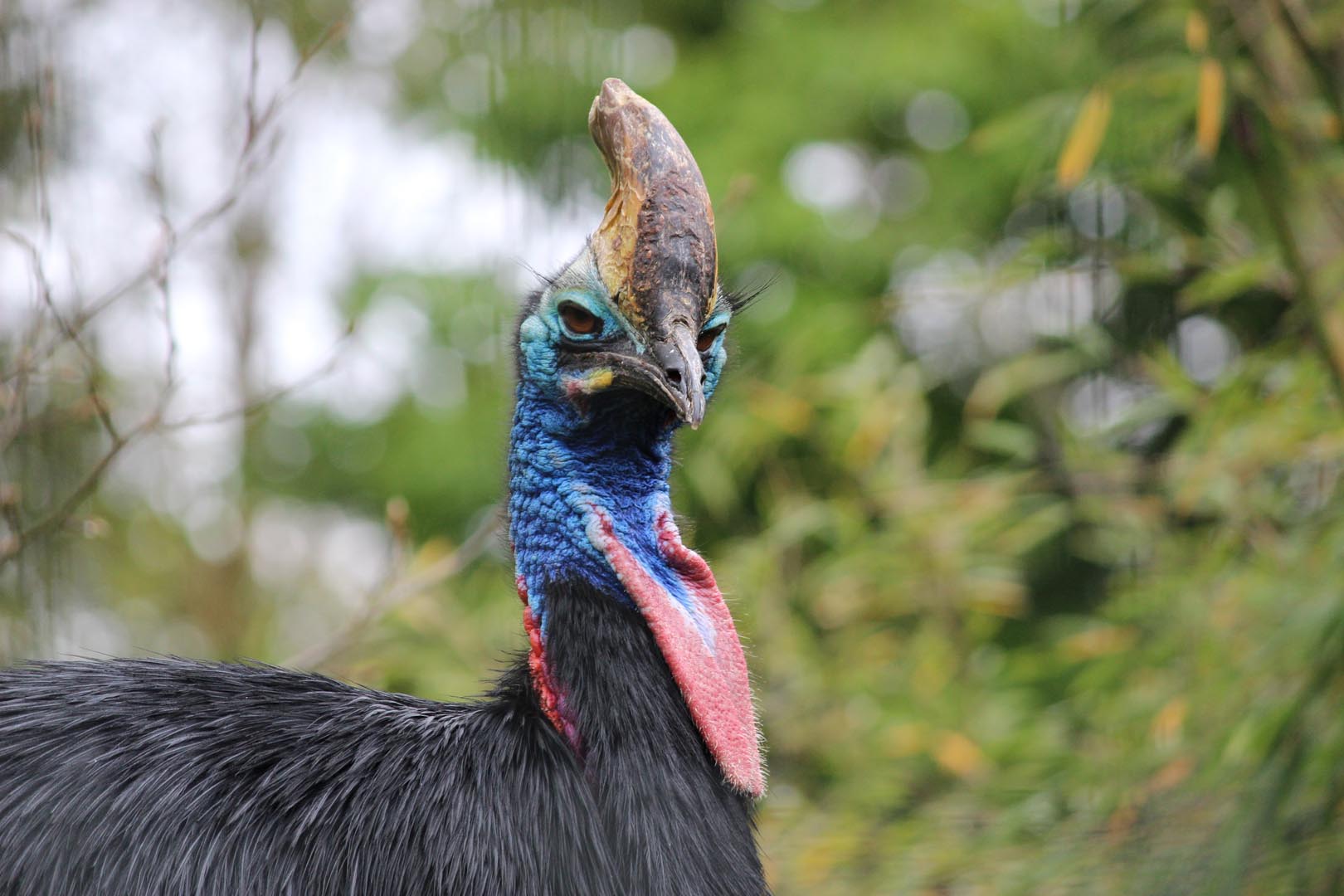
The southern cassowary is a large, flightless bird with a bright blue neck and head and red wattles. They are excellent runners and swimmers and can move at speed through dense rainforest.
These prehistoric-looking animals are one of the world’s largest birds. They stand almost six feet tall and weigh up to 67kgs. Males are smaller than females, tending to weigh between 50 to 60kg.
Southern cassowaries have a thick structure on their head called a casque. It looks a bit like bone, but it’s actually made of a foam-like material covered in keratin. This is the same material as human fingernails and tortoise shells. Scientists aren’t completely sure what the casque is for. They think it might help with showing off to other cassowaries, protecting their head or keeping cool.
Despite their calm appearance, cassowaries are dangerous when threatened. They use their powerful legs and sharp claws to defend themselves.
Population

Decreasing
Diet

Omnivore
Habitat

Rainforest
Fact file
Cassowaries have a 12cm dagger-like inner toe and can deliver powerful two-footed kicks at anyone they think might be a “threat” to them or their chicks
They feed on fruit fallen to the forest floor but also rodents and small birds
Southern cassowaries are native to northern Australia, New Guinea and surrounding islands
How we're helping
Like all the animals in our care our Southern cassowaries are amazing ambassadors for their relatives in the wild and help hundreds of thousands of people connect with nature every year. They encourage visitors to learn about the threats facing wildlife and the action they can take to help create a world where nature is protected, valued and loved.
As a wildlife conservation charity, we care for the animals here at the zoo and work to protect species at risk around the world. From providing expertise in genetics and veterinary health, to protecting wild places with local conservation partners, and even restoring threatened species to the wild, we are active where we are needed most.
Find out more about RZSS conservation