Northern Luzon giant cloud rat
Phloeomys pallidus

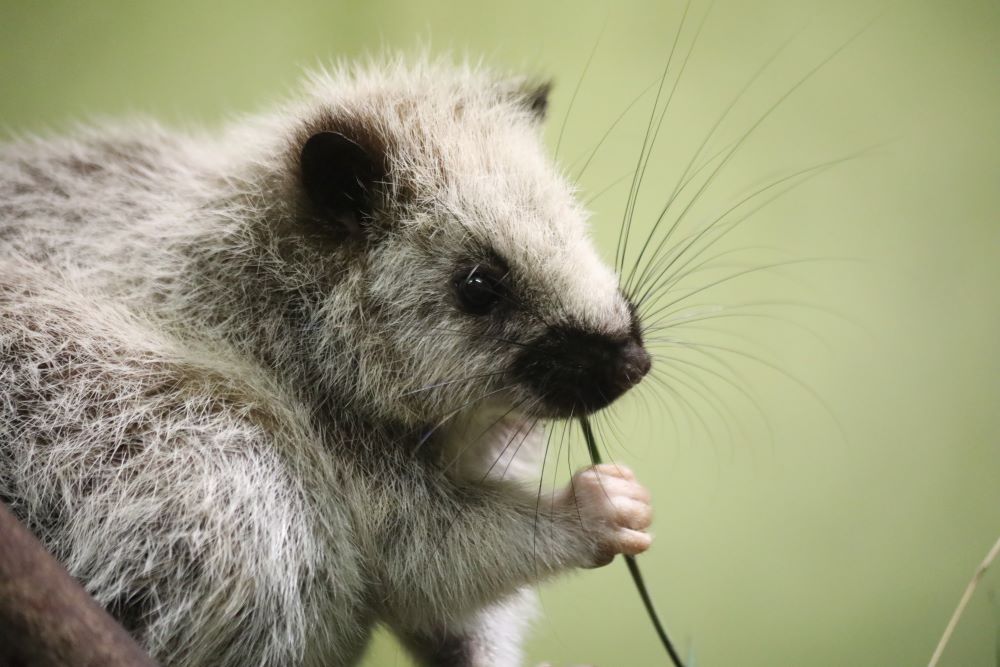
You can spot our cloud rats exploring together in the Magic Forest! They are called: Bagwiz, Chico, Nara, Pito, Taba, Talulah, Thistle, Thorn, Toby and Ulric.
The Northern Luzon giant cloud rat is a large species of rodent only found in Luzon. This is the largest and most inhabited island in the Philippines.
These timid, forest-dwelling animals have long, rough fur. Most of their coats are a combination of white to pale grey fur with dark brown or black markings on the face and body. They have small ears, long whiskers and a densely furred tail.
The Northern Luzon giant cloud rat can sometimes damage rice crops, so people often see them as pests and hunt them. In some areas, hunting has wiped them out, but they are still common in most areas and able to survive.
Population

Stable
Diet

Herbivore
Habitat

Forest
Fact file
They are also known as the ‘Cloudrunner’ as they mainly live high up in the canopy of trees, which is where the ‘cloud’ part of their name comes from
These ‘giants’ can measure up to 50 cm in length, not including their tail!
Northern Luzon giant cloud rats are nocturnal, meaning they are active at night
Their large hind feet and long claws make them excellent climbers.
How we're helping
Like all the animals in our care, our Northern Luzon giant cloud rats are amazing ambassadors for their relatives in the wild and help hundreds of thousands of people connect with nature every year. They encourage visitors to learn about the threats facing wildlife and the action they can take to help create a world where nature is protected, valued and loved.
As a wildlife conservation charity, we care for the animals here at the zoo and work to protect species at risk around the world. From providing expertise in genetics and veterinary health, to protecting wild places with local conservation partners, and even restoring threatened species to the wild, we are active where we are needed most.
Find out more about RZSS conservation