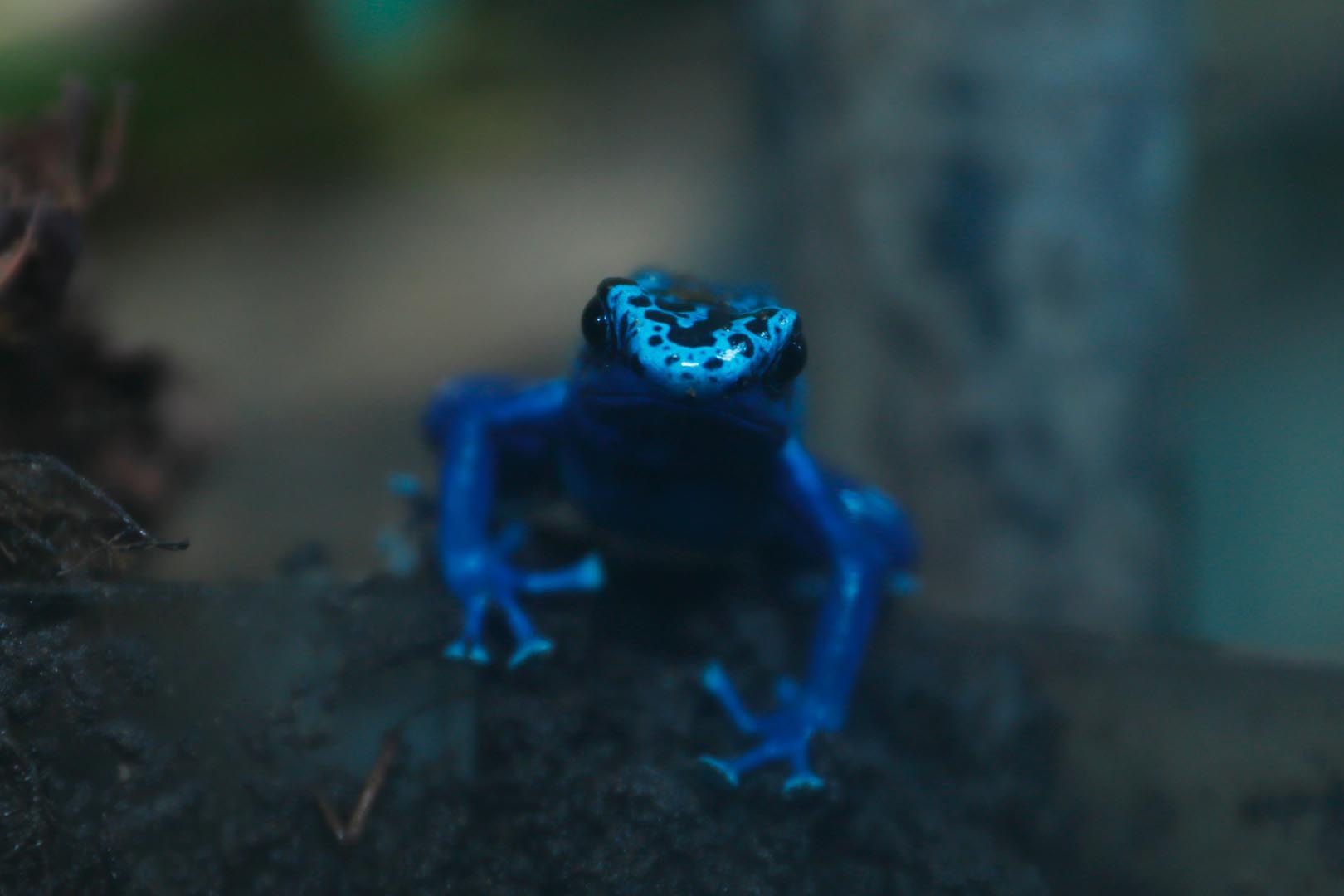
Blue poison dart frog
Dendrobates tinctorius azureus
.jpg)
We have several blue poison dart frogs in our Wee Beasties building.
These frogs come from a few rainforest areas in Suriname and northern Brazil. They were only officially discovered in 1969.
They are easy to spot because of their bright blue colour. This can range from shiny royal blue on their legs to darker shades on their bodies. Their bright colours are a warning to predators, a clever trick called aposematic colouration.
Unlike many frogs, blue poison dart frogs don’t have webbed toes, so they aren’t good swimmers. They spend most of their time hopping around on the forest floor instead of in water.
In the wild, these frogs have powerful poisons in their skin that can stop predators in their tracks. They don’t make the poison themselves - it comes from the toxic ants they eat. Indigenous people have used this poison for hundreds of years to coat blow darts for hunting. This is how the frogs got their name.
There are more than 100 kinds of poison dart frogs. Some are brighter than others, and the brighter the frog the more poisonous it usually is.
Today, poison dart frogs are in danger because their homes are being destroyed, the climate is changing and a deadly fungus called chytrid is harming amphibians all over the world.
Population

Unknown
Diet

Insectivore
Habitat

Rainforest
Fact file
Females lay between one and thirty eggs
The tadpoles will eat their siblings so they are each taken to different water sources on the back of one of the parents
The spots on their backs are unique and can be used to identify individuals, just like a human fingerprint
The male and females of this species can be distinguished by the shape of their toes - males' are heart-shaped and females' are round
How we're helping
Like all the animals in our care our blue poison dart frogs are amazing ambassadors for their relatives in the wild and help hundreds of thousands of people connect with nature every year. They encourage visitors to learn about the threats facing wildlife and the action they can take to help create a world where nature is protected, valued and loved.
As a wildlife conservation charity, we care for the animals here at the zoo and work to protect species at risk around the world. From providing expertise in genetics and veterinary health, to protecting wild places with local conservation partners, and even restoring threatened species to the wild, we are active where we are needed most.
Find out more about RZSS conservation