Socorro dove
Zenaida graysoni
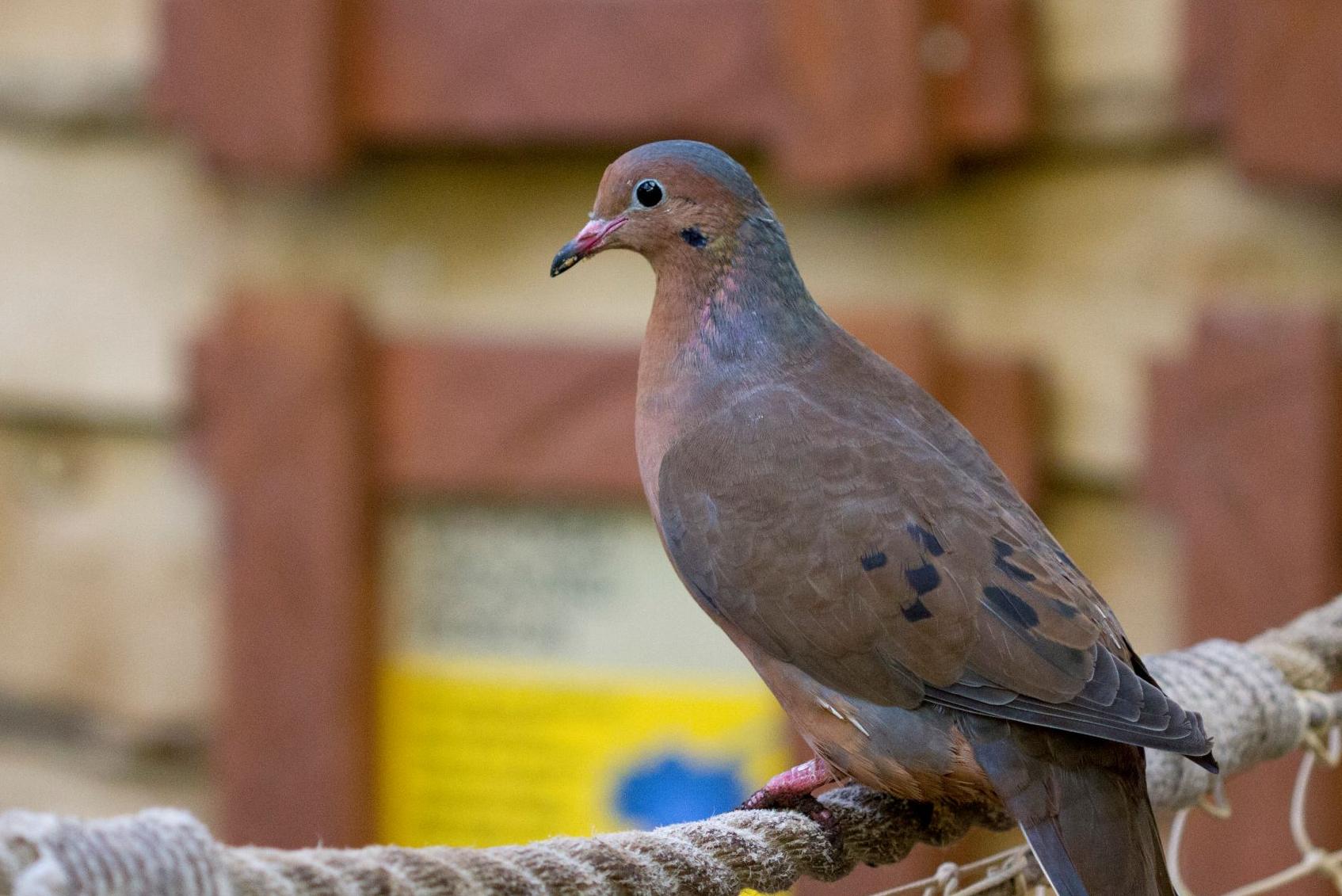
We are home to one Socorro dove called Gary, born in 2014. He lives in the aviary alongside the red-fronted macaws.
The Socorro dove is also known as the Grayson's dove. It is notable for its deep cinnamon colour, along with a blue-grey neck and an iridescent pink patch.
Socorro doves are extinct in the wild. They were native to Socorro Island off the coast of Mexico. Several factors contributed to the dove's struggles.
One was the introduction of cats to the island by humans. There were no mammals like cats on the island, so the dove did not know they were a threat. This made than easy hunting. Livestock, like sheep, also played a role. They added competition over the vegetation that the doves eat.
The species has survived in human captivity. However, there are still fewer than 200 Socorro doves remaining. Conservation efforts are trying to reverse the decline and reintroduce the dove into the wild.
Population

Unknown
Diet

Herbivore
Habitat

Forest
Fact file
Lives in thick shrubland
Eats seeds, fruits, berries and insects
Extinct in the wild since 1972
They come from the remote Socorro Island. This sits 370 miles off the west coast of Mexico. It is the largest the volcanic Revillagigedo Islands
How we're helping
Like all the animals in our care, our Socorro dove is an amazing ambassadors for its species and help hundreds of thousands of people connect with nature every year. They encourage visitors to learn about the threats facing wildlife and the action they can take to help create a world where nature is protected, valued, and loved.
As a wildlife conservation charity, we care for the animals here at the zoo and work to protect species at risk around the world. From providing expertise in genetics and veterinary health to protecting wild places with local conservation partners, and even restoring threatened species to the wild, we are active where we are needed most.
Find out more about RZSS conservation