Kirk's dik-dik
Madoqua kirkii
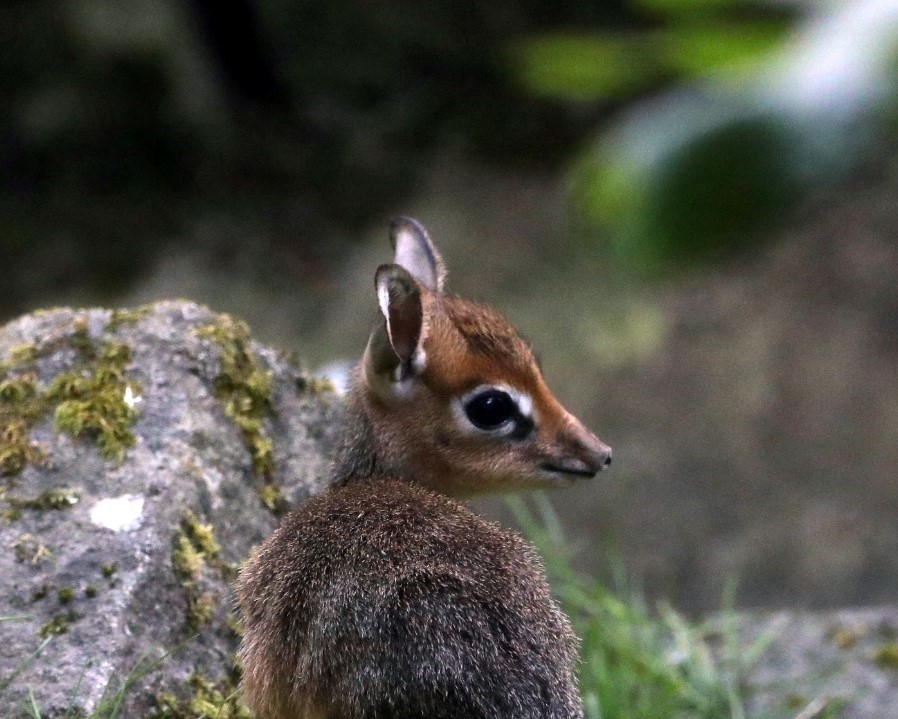
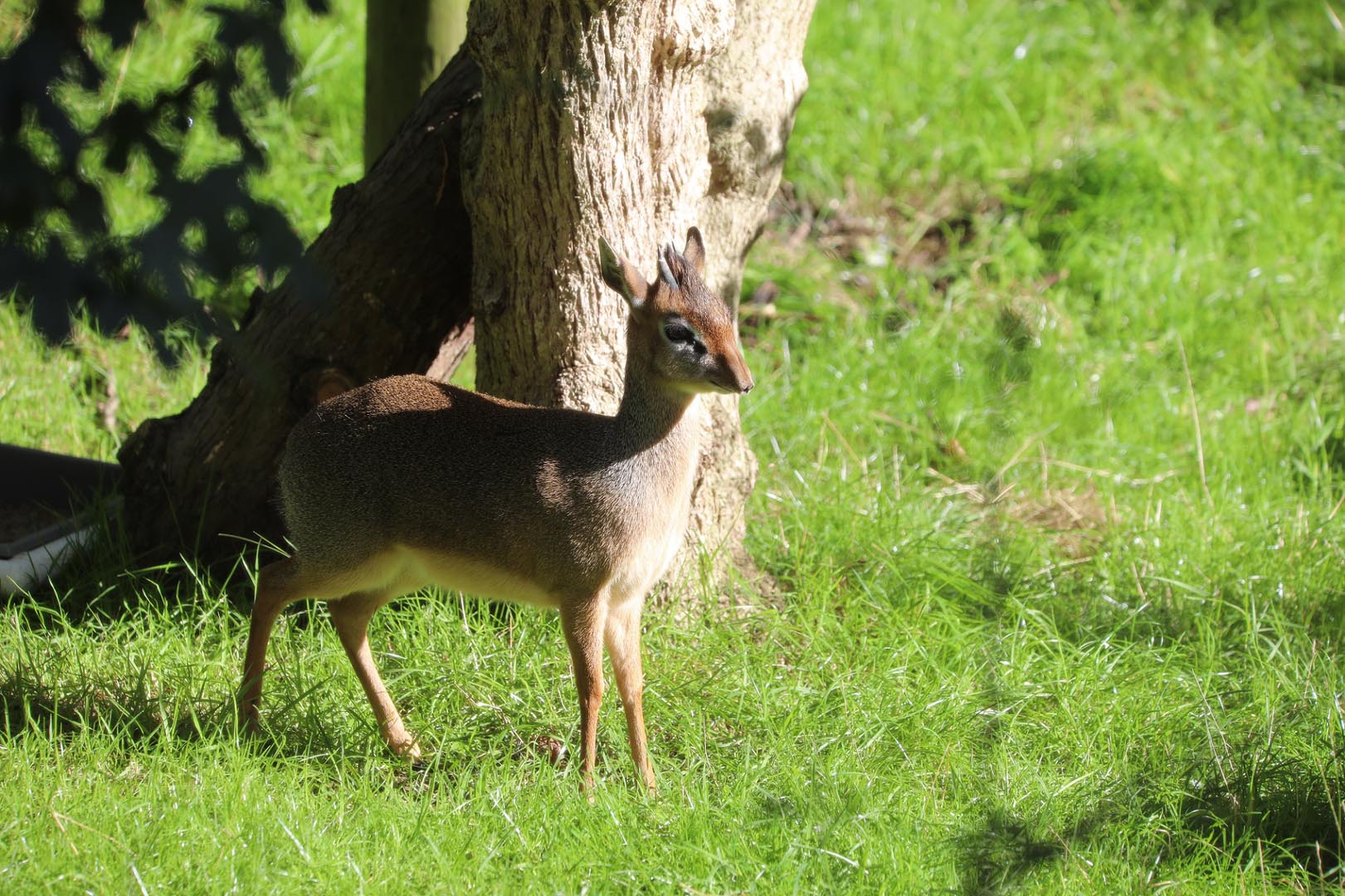
There are six Kirk’s dik-diks here at Edinburgh Zoo. We have three males, Thistle, Stir-Fry and Tucker, and three females, Noodle, Tik and Petal.
Dik-diks are one of the world's smallest antelope species, only weighing up to 7kg.
They get their name from the distinctive ‘dik-dik’ call they make when startled. They will jump from their hiding place and move in a series of zig-zag leaps while making this call to confuse predators.
Population

Stable
Diet

Herbivore
Habitat

Grasslands
Fact file
They tend to form monogamous mating pairs and can have two babies per year
They use a special alarm call, a high-pitched whistling sound, to warn other dik-diks nearby of danger
They mark territory using scent from glands on their faces, helping them communicate with other dik-diks without fighting
How we're helping
Like all the animals in our care our Kirk’s dik-diks are amazing ambassadors for their relatives in the wild and help hundreds of thousands of people connect with nature every year. They encourage visitors to learn about the threats facing wildlife and the action they can take to help create a world where nature is protected, valued and loved.
As a wildlife conservation charity, we care for the animals here at the zoo and work to protect species at risk around the world. From providing expertise in genetics and veterinary health, to protecting wild places with local conservation partners, and even restoring threatened species to the wild, we are active where we are needed most.
Find out more about RZSS conservation