King penguin
Aptenodytes patagonicus
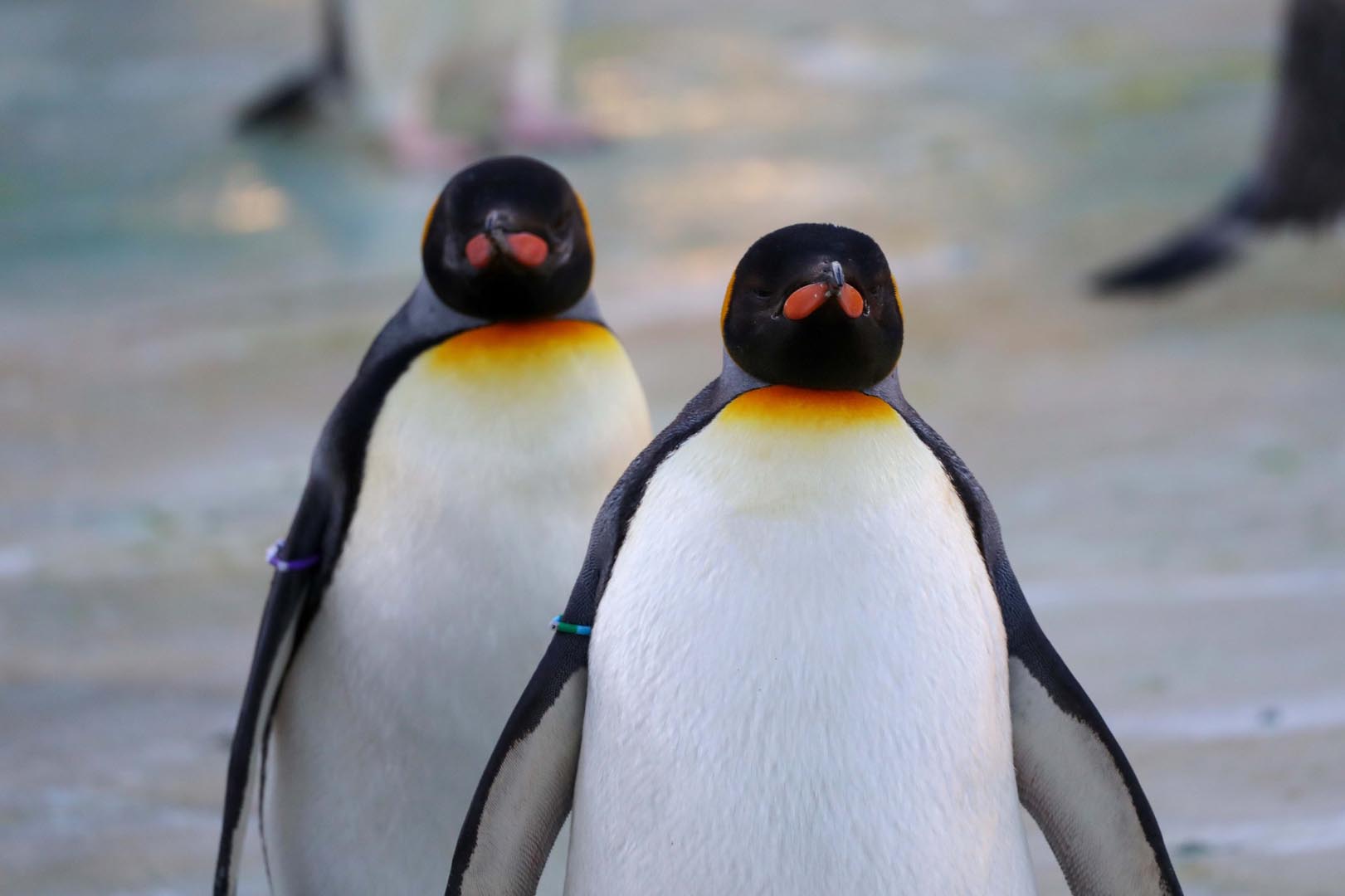
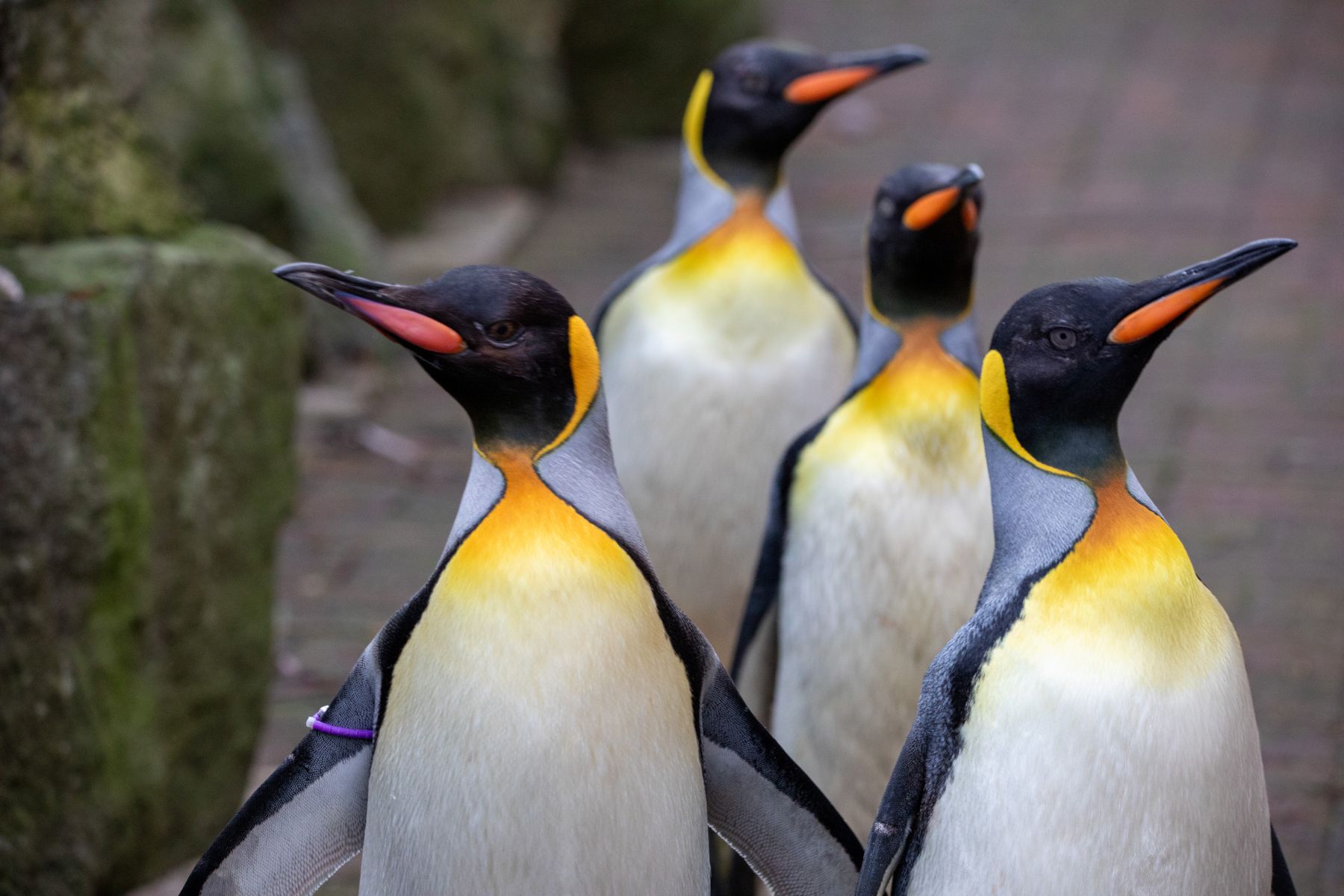
We are home to six king penguins here at Edinburgh Zoo. Our three males are Kongo, Bow, and Major General Sir Nils Olav, who is the world's only knighted penguin! We welcomed three females to the zoo in January 2026. Their names are Constance, Maude and Alma.
King penguins were one of the very first species at the zoo. In 1919 we welcomed our first chick, making us the first zoo in the world to breed the species successfully. Our logo features a king penguin because of this long history.
These penguins are the second largest in the world, with only the emperor penguin being bigger. While the two species look very similar, king penguins have a straighter beak and bright orange markings.
They live on subantarctic islands, north of the Antarctic continent, in areas like South Georgia, Crozet Islands and the Falkland Islands. They prefer snow-free shores and valleys near the sea for their large colonies.
Unlike most birds, they do not make nests. Instead, they rest eggs on their feet. This keeps it off the frozen ground. Both parents take it in turns holding the egg, with some shifts lasting two weeks or more.
Population

Increasing
IUCN August 2018
Diet

Piscivore
Habitat

Oceans
Fact file
King penguins are the second largest penguin species - emperor penguins are the largest
They can dive to amazing depths to hunt their prey – sometimes up to 300 metres!
King penguins lay only one egg. Both the male and female will share incubation duties and take care of the chick when it hatches
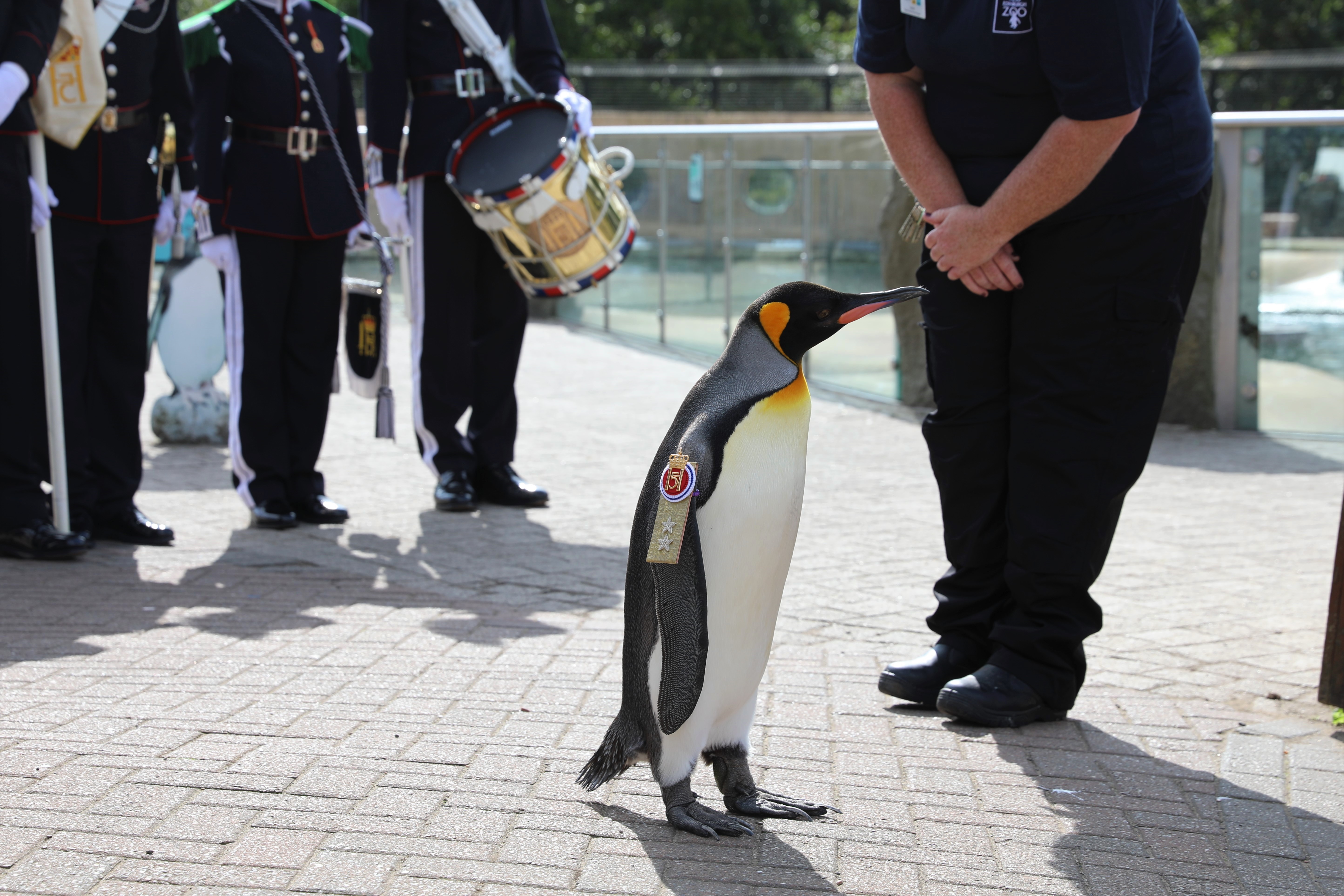
Did you know that Edinburgh Zoo is home to a knighted king penguin? Meet the world's highest-ranking animal, Major General Sir Nils Olav!
Sir Nils is the mascot and Major General of the Norwegian King's Guard, he even holds the Guinness World Records title for the world’s highest-ranking penguin.
Find out more about Sir NilsLatest king penguin news
View all news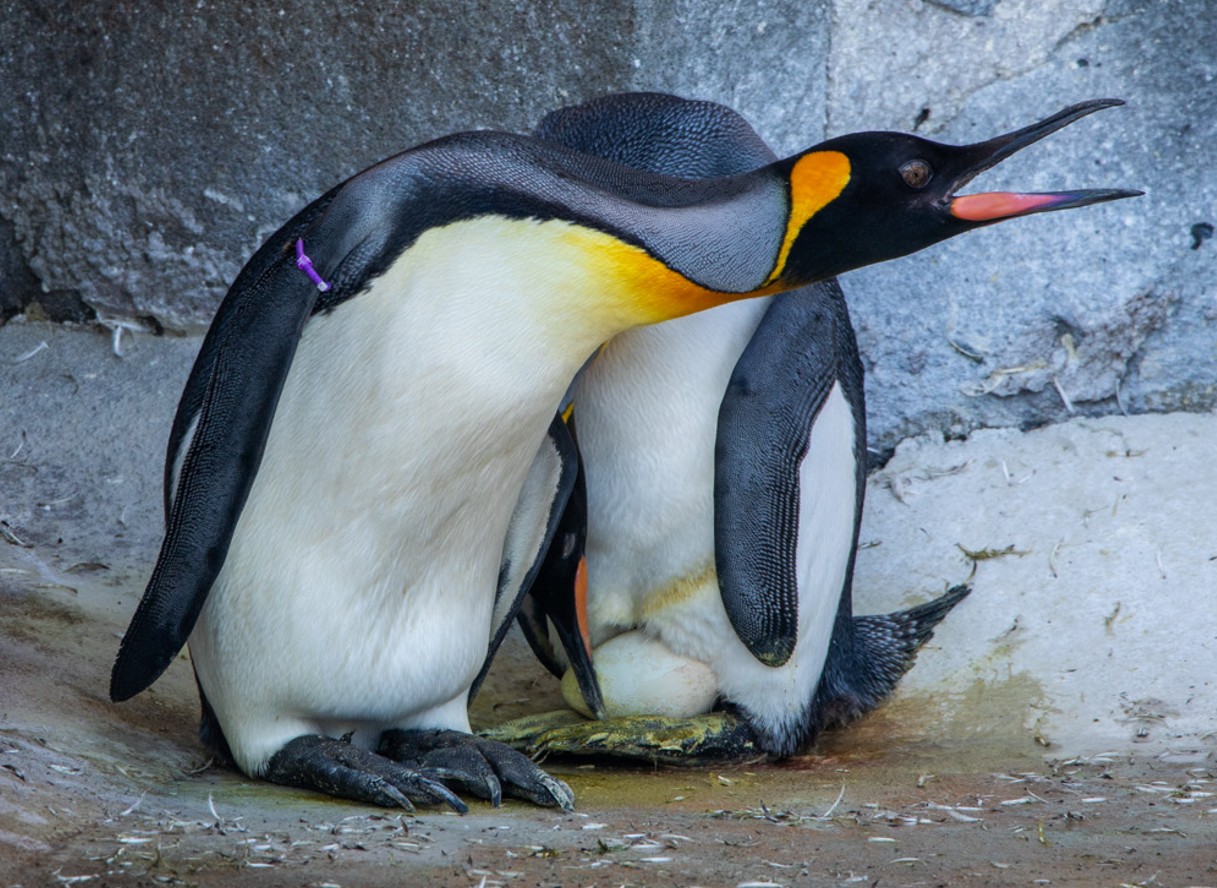
21 Aug 2026
Five minute read
27 Jan 2026
Two minute read

17 Nov 2025
One minute read
How we're helping
Like all the animals in our care our king penguins are amazing ambassadors for their relatives in the wild and help hundreds of thousands of people connect with nature every year. They encourage visitors to learn about the threats facing wildlife and the action they can take to help create a world where nature is protected, valued and loved.
As a wildlife conservation charity, we care for the animals here at the zoo and work to protect species at risk around the world. From providing expertise in genetics and veterinary health, to protecting wild places with local conservation partners, and even restoring threatened species to the wild, we are active where we are needed most.
Find out more about RZSS conservation