Milk snake
Lampropeltis triangulum
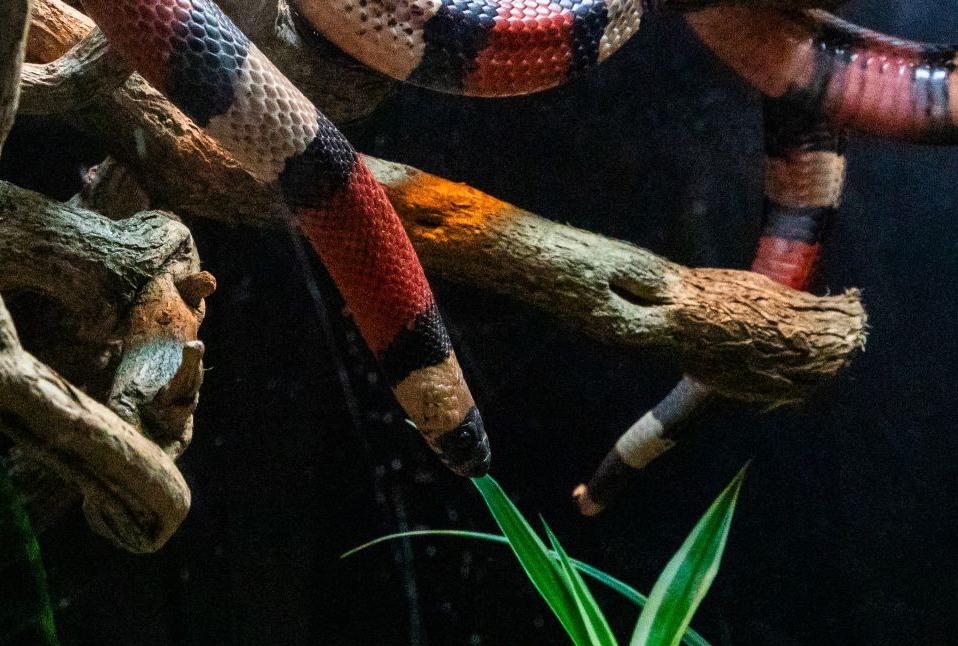
We have one milk snake at Edinburgh Zoo. His name is Horatio, and he lives in Wee Beasties.
Milk snakes are non-venomous constrictors that use two clever tricks to appear more threatening.
The first trick is their colouring. They have distinctive red, black and white or yellow bands that mimic the pattern of venomous coral snakes.
The second trick is their behaviour. When threatened, they will shake their tails and hiss, copying more dangerous snakes to put off potential predators.
Their name comes from the old folklore belief that they drink milk from cattle, as they are often found in barns. But this is a myth: milk snakes feed on small mammals, birds, eggs and even other snakes.
Milk snakes live across the Americas, ranging from Canada to Ecuador.
Population

Unknown
Diet

Carnivore
Habitat

Grasslands
Fact file
Milk snakes have some resistance to the venom of other snakes, so they can eat other snakes, including venomous ones
They may shake their tail in dry leaves to mimic a rattlesnake sound when threatened
They kill prey by constriction - wrapping around and squeezing rather than using venom
The banded colours mimic venomous coral snakes as a defence mechanism. This is a type of Batesian mimicry, which is where a harmless animal imitates a more dangerous one to avoid being eaten