Madagascan hissing cockroach
Gromphadorhina portentosa
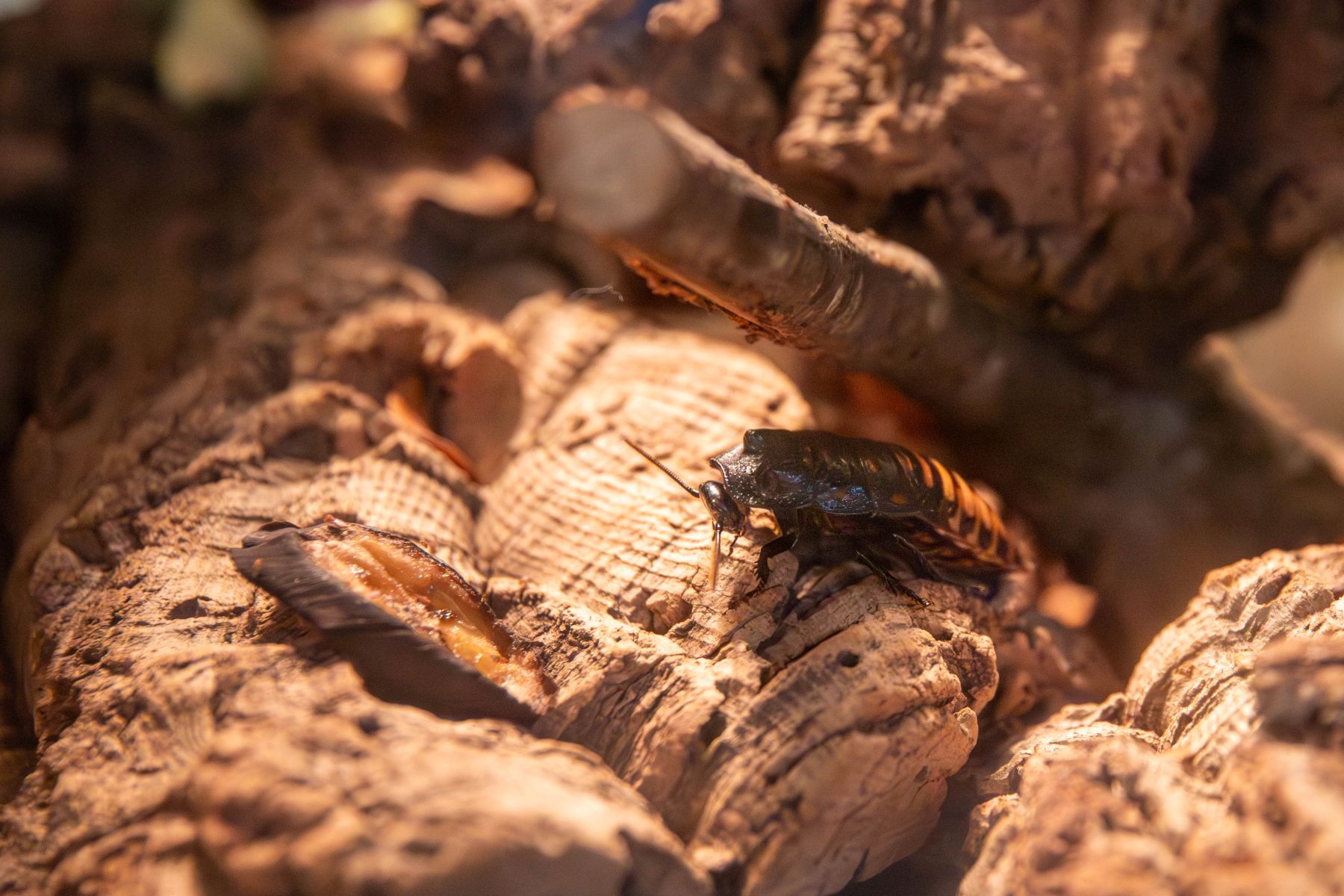
We are home to a group of Madagascan hissing cockroach, which live in Wee Beasties. They are sometimes called the Malagasy hissing cockroach or simply 'hissers.'
They are native only to Madagascar, off the African coast. They live on the forest floor, particularly in tropical lowlands among fallen leaves and rotten logs.
The hissing cockroach is the only cockroach that is wingless and makes an audible sound. Other than scurrying away, their main tactic to warn off predators is to push air through holes in their body, called spiracles.
Female hissing cockroaches only hiss as a form of defence. Males hiss as defence, to attract females or to settle territorial disputes with other males.
Population

Unknown
Diet

Omnivore
Habitat

Forest
Fact file
The sound hissing cockroaches make is sometimes described as being closer to the shake of a rattlesnake
They don’t like bright light, so their home need lots of places to hide and stay in shade
Hissing cockroaches have bene known to live up to five years
They mostly eat vegetation
How we're helping
Like all the animals in our care, our Madagascan hissing cockroaches are amazing ambassadors for their relatives in the wild and help hundreds of thousands of people connect with nature every year. They encourage visitors to learn about the threats facing wildlife and the action they can take to help create a world where nature is protected, valued, and loved.
As a wildlife conservation charity, we care for the animals here at the zoo and work to protect species at risk around the world. From providing expertise in genetics and veterinary health to protecting wild places with local conservation partners, and even restoring threatened species to the wild, we are active where we are needed most.
Find out more about RZSS conservation